



What's Happening?
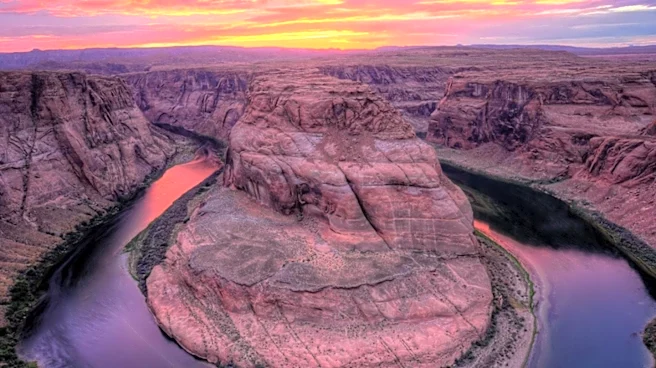
The U.S. Interior Department has announced a new federal plan mandating significant water cuts from the Colorado River for Arizona, California, and Nevada over the next decade. This plan is a response to severe drought conditions exacerbated by climate
change and high water demand. The Colorado River is a crucial water source for over 40 million people across seven states and numerous tribal communities. The plan outlines potential water use reductions of up to 40% for the affected states, with adjustments to be made every two years.
Why It's Important?
The mandated water cuts are critical due to the ongoing drought and the river's vital role in supporting urban areas, agriculture, and ecosystems in the Southwest. The reductions will have significant economic and social impacts, particularly in Arizona, where the cuts could severely affect the economy and water availability in the Phoenix area. The plan underscores the urgent need for sustainable water management practices and cooperation among states to address the challenges posed by climate change and resource scarcity.
What's Next?
The Interior Department is expected to announce specific water cut sizes for the next two years soon. States will need to negotiate and adjust their water management strategies to comply with the new plan. Arizona, California, and Nevada are likely to explore alternative water sources and conservation measures to mitigate the impact of the cuts. The plan's implementation will be closely monitored, and further negotiations may be necessary to reach a long-term agreement among the states involved.
Beyond the Headlines
The water cuts highlight the broader issue of water scarcity in the American Southwest and the need for innovative solutions to manage limited resources. The situation may prompt increased investment in water conservation technologies and infrastructure improvements. Additionally, the plan could influence future water policy and interstate cooperation, setting a precedent for how regions can collaboratively address environmental challenges.