




What's Happening?
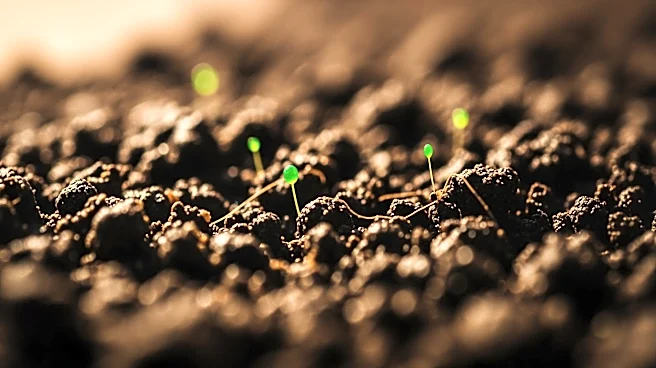
Recent advancements in genomic sequencing and metagenomics have renewed interest in soil microbiomes as a source of new antibiotics. Historically, soil has been a rich source of antibiotics, but discovery rates declined due to the 'culturability crisis,'
where 99% of environmental microorganisms could not be cultured under standard lab conditions. Modern technologies, such as the isolation chip (iChip) and AI-assisted discovery, are now enabling the study of previously unculturable microbes. These methods have led to the identification of new antibiotic classes, such as Teixobactin and lariocidin, which show promise against resistant bacteria. The renewed focus on soil microbiomes is driven by the urgent need to address antimicrobial resistance, which is linked to millions of deaths globally.
Why It's Important?
The resurgence in soil-based antibiotic discovery is crucial as antimicrobial resistance poses a significant threat to global health, with limited new antibiotics being developed. Soil microbiomes offer a vast, untapped reservoir of bioactive compounds that could lead to novel treatments for resistant infections. This research not only aims to discover new antibiotics but also to understand the evolution of resistance genes in the environment. The integration of AI and advanced cultivation techniques could accelerate the development of effective antibiotics, potentially transforming infectious disease management and reducing the global burden of resistant infections.
What's Next?
Future efforts will likely focus on combining AI-assisted screening with metagenomics and improved cultivation platforms to access previously uncultured microbes. This approach could expand the pipeline of potential antibiotic candidates. Additionally, environmental stewardship will be essential to manage the spread of resistance genes from soil to other ecosystems. Regulatory measures, such as tighter antibiotic-use policies and soil monitoring, may be implemented to mitigate the environmental impact of antibiotic resistance. Continued research and collaboration between scientists, policymakers, and industry stakeholders will be vital to advancing these initiatives.
Beyond the Headlines
The exploration of soil microbiomes for antibiotic discovery highlights the interconnectedness of environmental health and human medicine. Soil not only serves as a source of new drug leads but also as a reservoir for resistance genes, emphasizing the need for a 'One Health' approach that considers the health of humans, animals, and ecosystems. This perspective could lead to more sustainable antibiotic use and development practices, ensuring the long-term efficacy of antimicrobial therapies. The integration of environmental and medical research may also foster innovative solutions to global health challenges.