






What's Happening?
Russia has raised concerns regarding the efforts of the G7 nations, including the US and EU, to secure access to rare earths and critical minerals in Central Asia. Deputy Foreign Minister Mikhail Galuzin stated that these efforts are not merely economic
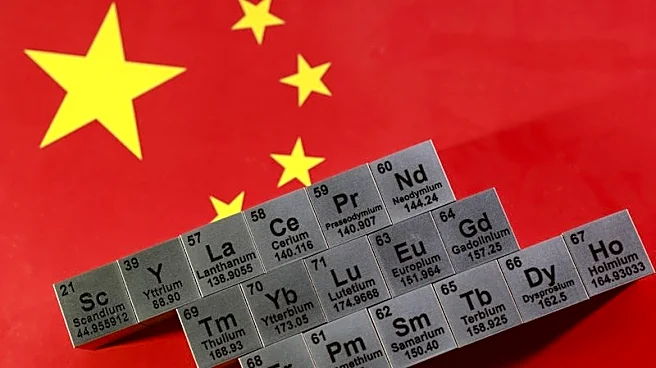
competition but an attempt to push Russia out and establish a Western-controlled infrastructure near its borders. The G7's initiative aims to diversify from China's dominance in rare earth supply chains, which are crucial for technologies like electric vehicles, renewable energy, and defense systems. Central Asian countries such as Kazakhstan, Kyrgyzstan, Tajikistan, Turkmenistan, and Uzbekistan are considered by Russia as part of its sphere of interest.
Why It's Important?
The G7's move to secure rare earths in Central Asia is significant as it represents a strategic shift to reduce dependency on China for critical minerals. This could potentially alter global supply chains and impact the geopolitical landscape, especially in regions where Russia and China have vested interests. For the US and EU, diversifying sources of rare earths is crucial for technological advancements and national security. However, this initiative could strain relations with Russia, which views these actions as encroachments on its traditional sphere of influence.
What's Next?
The G7 nations are likely to continue their efforts to establish agreements with Central Asian countries, which may lead to increased diplomatic tensions with Russia. The US and EU might also seek to strengthen alliances with these nations to secure their supply chains. Russia, on the other hand, may respond by bolstering its own influence in the region or seeking new partnerships to counterbalance the G7's initiatives.