


What's Happening?
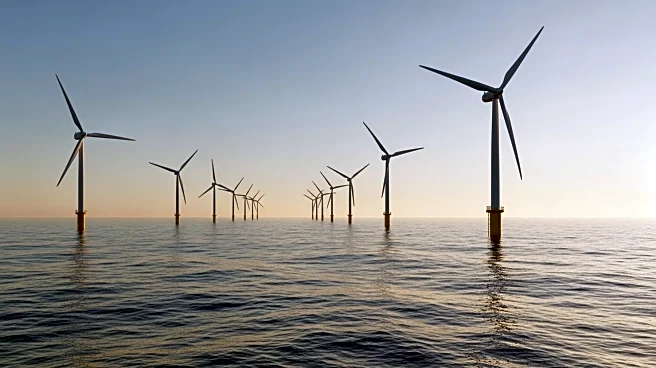
At the third North Sea Summit, nine Northern European countries signed the Hamburg Declaration, committing to develop 100 GW of offshore wind power. This plan aims to enhance energy security and achieve energy sovereignty by coordinating efforts and sharing
power generation capacity. The UK leads in offshore wind energy, while other countries face challenges in launching new projects. The declaration outlines steps to stabilize the tender pipeline, de-risk investments, and simplify permitting processes. More than 100 companies have pledged to reduce offshore wind energy costs by 30% by 2040.
Why It's Important?
The Hamburg Declaration marks a significant step towards achieving Europe's clean energy goals, with an estimated investment of over $1 trillion. The initiative aims to increase energy security and reduce reliance on fossil fuels, aligning with global efforts to combat climate change. By fostering collaboration among European countries, the plan could lead to more efficient and cost-effective renewable energy projects. The commitment to reducing costs and increasing capacity may also drive technological advancements in the offshore wind sector.
What's Next?
The participating countries plan to build a steady pipeline for installing 15 GW per year across the North Sea and Baltic. The declaration also proposes hybrid offshore assets and cross-border projects to enhance energy sharing. Despite pressure from President Trump, who criticized wind energy, European countries remain committed to their clean energy strategy. The initiative may face challenges in implementing the proposed changes, but it is expected to significantly contribute to Europe's renewable energy capacity by 2050.
Beyond the Headlines
The Hamburg Declaration highlights the importance of international cooperation in addressing global energy challenges. By focusing on renewable energy, the initiative could help reduce greenhouse gas emissions and promote sustainable economic growth. The plan also emphasizes the need for a stable investment framework to attract private sector participation. As Europe continues to lead in renewable energy development, the project could serve as a model for other regions seeking to transition to clean energy.