





What's Happening?
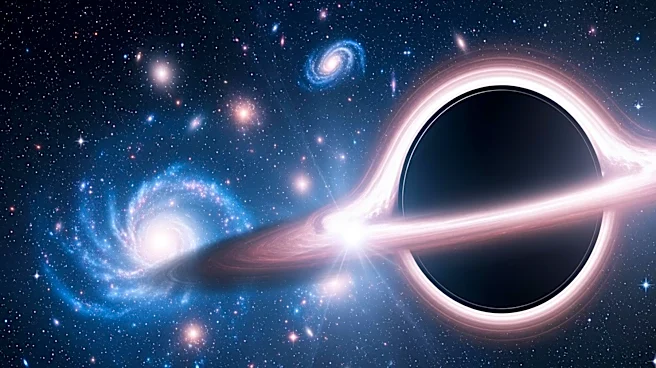
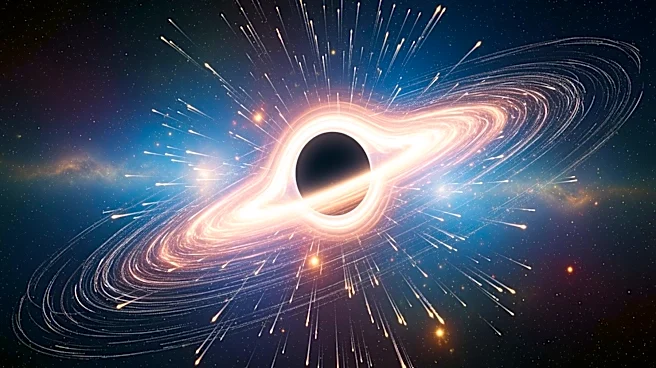
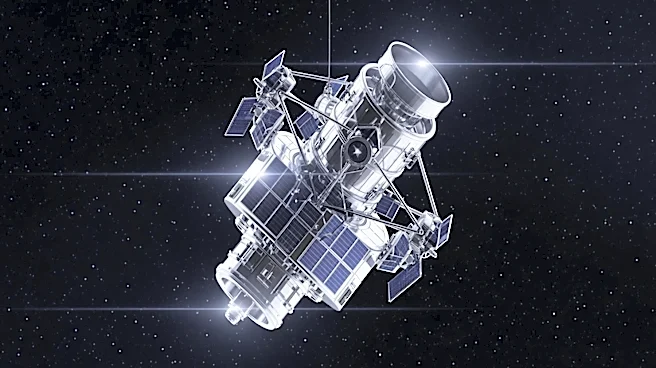
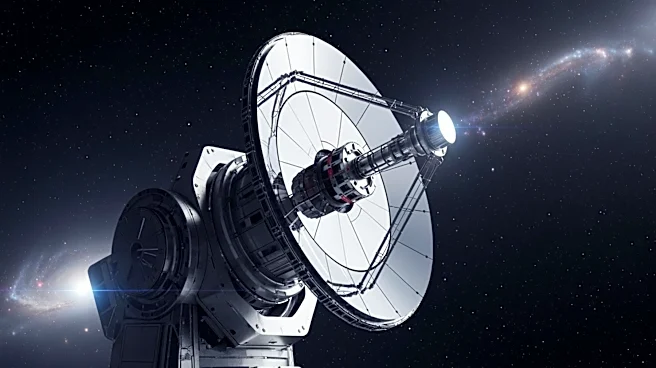
Astronomers have identified a wind emanating from the supermassive black hole at the center of the Milky Way galaxy, known as Sagittarius A* (Sgr A*). This discovery was made using data from the ALMA telescope in Chile and NASA's Chandra X-ray Observatory.
The wind creates a vast conical cavity filled with hot, electrically charged gas, which is believed to be sculpted by the black hole's wind. This finding resolves a long-standing mystery about whether Sgr A* expels gas and material into space, a behavior observed in other supermassive black holes. The black hole, possessing about 4 million times the mass of the sun, is currently in a relatively quiescent phase, resulting in a gentle breeze rather than a violent outburst.
Why It's Important?
The discovery of the wind from Sgr A* is significant as it provides insights into the behavior of supermassive black holes and their impact on their host galaxies. Understanding these winds is crucial because they can influence the distribution of gas and star formation in galaxies. The gentle nature of the wind from Sgr A* suggests that it may not drastically alter the galactic center, but it highlights the potential for more intense winds to disrupt galaxies. This finding contributes to the broader understanding of galaxy evolution and the role of black holes in shaping the universe.
What's Next?
Future research will likely focus on further characterizing the wind from Sgr A* and understanding its implications for the Milky Way. Scientists may also explore the potential for similar winds in other galaxies and their effects on galactic dynamics. Continued observations using advanced telescopes and instruments will be essential to uncover more details about the interactions between supermassive black holes and their environments.