



What's Happening?
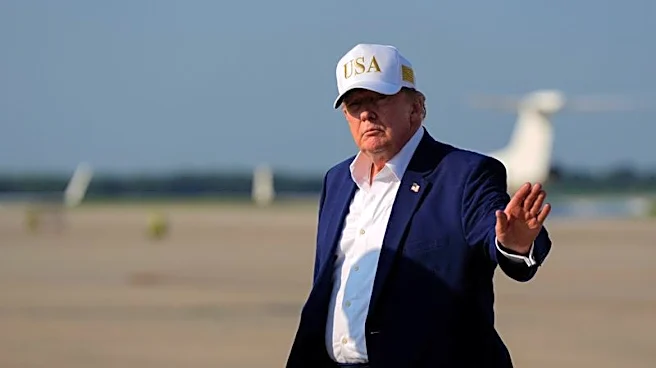
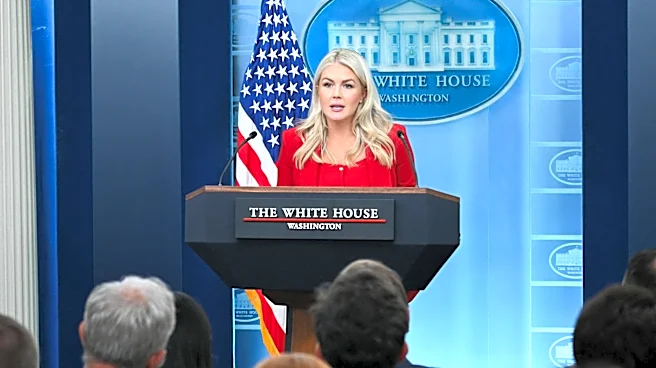
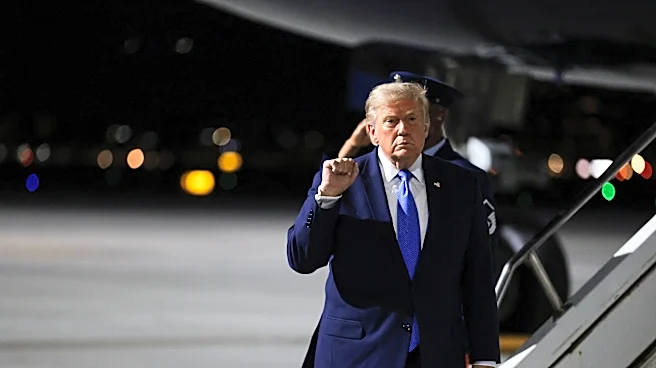
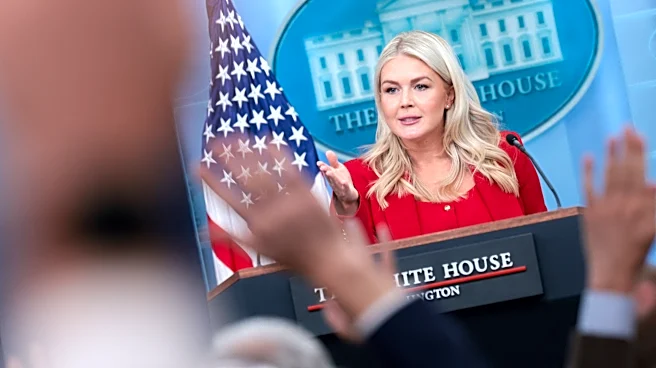
Jayme Leagh Franklin, a former White House staffer, has refuted viral claims that she used a hidden device to wake President Trump during a recent Oval Office ceremony. The speculation arose after President Trump appeared drowsy during the event, leading
to rumors that Franklin, who was seen touching her stomach, was using a device to alert him. Franklin, who is pregnant, dismissed these claims on social media, clarifying that she was merely touching her stomach due to her pregnancy. The White House has previously addressed similar rumors about President Trump appearing to fall asleep during public events.
Why It's Important?
This incident highlights the challenges faced by public figures and their associates in the age of viral misinformation. The rapid spread of such rumors can impact public perception and distract from the actual events or policies being discussed. For President Trump, these claims add to ongoing scrutiny of his public appearances and health. The situation also underscores the role of social media in amplifying conspiracy theories, which can influence public discourse and political narratives.
What's Next?
As misinformation continues to spread rapidly online, public figures and institutions may need to adopt more proactive strategies to address and dispel rumors. This could involve more frequent and transparent communication with the public to clarify misunderstandings. The incident may also prompt discussions about the ethical responsibilities of media outlets and social media platforms in preventing the spread of unfounded claims.
Beyond the Headlines
The viral nature of the claims against Franklin reflects a broader cultural phenomenon where conspiracy theories can quickly gain traction, often overshadowing factual reporting. This raises questions about the public's ability to discern credible information and the potential consequences of misinformation on political processes and public trust in institutions.