






What's Happening?
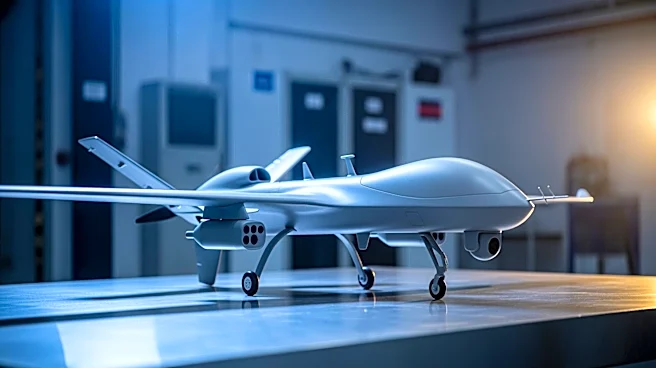
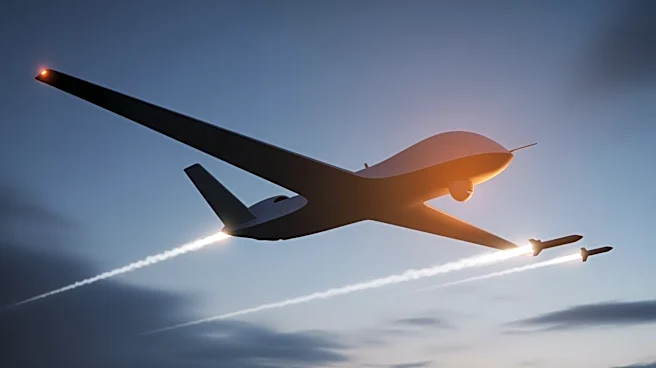
China has introduced new variants of the BZK-005 unmanned aerial vehicle (UAV) equipped with electronic intelligence (ELINT) and electronic warfare (EW) systems. These UAVs, operated by the People's Liberation Army (PLA), are designed for intelligence,
surveillance, and reconnaissance (ISR) missions. The BZK-005, a medium-altitude long-endurance (MALE) platform, has been in service with the PLA Navy since 2009 and the PLA Air Force since 2007. Recent developments include the BZK-005D variant, which features a centerline ELINT pod, and another variant with slimmed-down ELINT pods, as observed in footage from Chinese state media. These UAVs have been deployed for operations over strategic areas such as the Bashi Channel, Taiwan Strait, and East China Sea.
Why It's Important?
The deployment of these advanced UAVs underscores China's growing capabilities in electronic warfare and intelligence gathering. This development is significant for regional security dynamics, particularly in the Asia-Pacific region, where tensions over territorial disputes and military presence are high. The enhanced ELINT capabilities of these UAVs allow China to conduct more effective surveillance and reconnaissance, potentially altering the balance of power in contested areas. For the U.S. and its allies, this advancement necessitates a reassessment of their own intelligence and defense strategies to counteract China's expanding technological prowess.
What's Next?
The introduction of these UAV variants is likely to prompt responses from neighboring countries and the U.S., potentially leading to increased military and intelligence activities in the region. The U.S. and its allies may enhance their own surveillance and reconnaissance operations to monitor Chinese activities more closely. Additionally, this development could accelerate the arms race in the region, with countries investing in countermeasures and advanced technologies to maintain strategic parity.
Beyond the Headlines
The deployment of these UAVs also raises questions about the ethical implications of increased surveillance and the potential for escalation in military confrontations. As countries enhance their intelligence capabilities, the risk of misinterpretation and accidental conflict may rise. Furthermore, the use of advanced UAVs for surveillance could lead to privacy concerns and debates over the legality of such operations under international law.