





What's Happening?
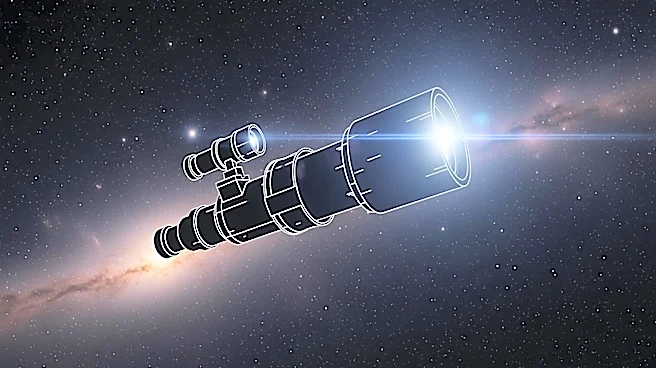
NASA is set to unveil the Nancy Grace Roman Space Telescope, a new flagship observatory designed to explore the cosmos and solve some of the universe's biggest mysteries. The telescope, named after NASA's first chief astronomer, has been fully assembled
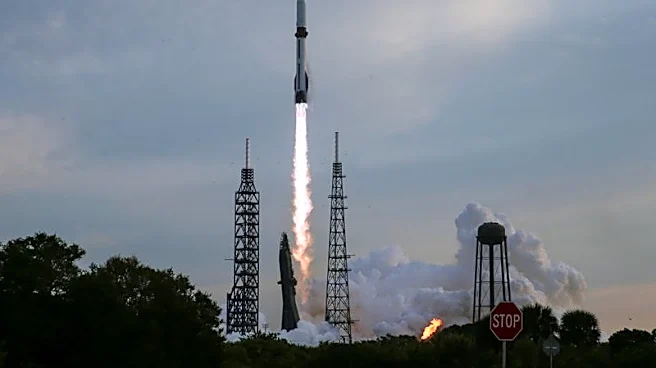
at NASA's Goddard Space Flight Center in Greenbelt, Maryland. It is scheduled to be shipped to the Kennedy Space Center in Florida, where it will be prepared for launch aboard a SpaceX Falcon Heavy rocket as early as fall 2026. The Roman telescope will operate nearly 1 million miles from Earth, working in tandem with the James Webb and Hubble space telescopes. It is equipped with advanced instruments to make infrared observations and is expected to discover thousands of new exoplanets using gravitational microlensing.
Why It's Important?
The Nancy Grace Roman Space Telescope represents a significant advancement in astronomical research, offering a panoramic view of the cosmos that could lead to revolutionary discoveries. Its ability to detect new celestial objects and phenomena will enhance our understanding of the universe, particularly in the study of dark matter and dark energy. The telescope's mission aligns with ongoing efforts to search for life beyond Earth, potentially identifying new exoplanets. This development underscores NASA's commitment to expanding human knowledge of space and could have profound implications for science and technology, inspiring future generations of astronomers and scientists.
What's Next?
Following its unveiling, the Roman Space Telescope will undergo final preparations for its launch, which is anticipated between fall 2026 and May 2027. NASA will continue to conduct prelaunch testing to ensure the telescope's readiness. The scientific community eagerly awaits the data that the Roman telescope will provide, which could lead to new research opportunities and collaborations. As the launch date approaches, NASA will likely engage with the public and scientific community through media events and educational outreach to highlight the telescope's capabilities and potential discoveries.