







What's Happening?
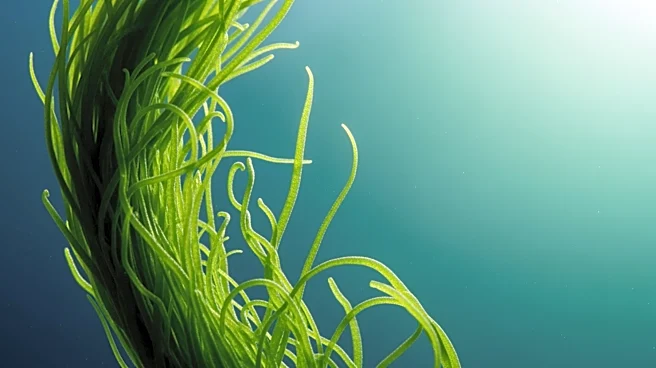
A recent scientific breakthrough has revealed that a specially cultivated form of Spirulina can produce biologically active vitamin B12, offering a sustainable alternative to traditional animal-based sources. This development, published in Discover Food,
addresses the global issue of vitamin B12 deficiency, which affects millions and can lead to serious health problems. Traditional sources of B12 are primarily animal-based, contributing significantly to greenhouse gas emissions and environmental degradation. The new form of Spirulina, developed by researchers from Reichman University and collaborators from Iceland, Denmark, and Austria, is grown in a closed photobioreactor using renewable energy sources. This method allows the algae to produce bioavailable vitamin B12 without genetic modification, making it an environmentally friendly solution.
Why It's Important?
The discovery of a sustainable source of vitamin B12 in Spirulina has significant environmental and health implications. Traditional livestock farming, a major source of B12, is resource-intensive and a significant contributor to climate change due to methane emissions. By contrast, Spirulina cultivation is less resource-intensive and carbon-neutral, utilizing renewable energy sources like geothermal and hydroelectric power. This breakthrough could reduce the environmental impact of B12 production and provide a viable alternative to meat-based sources, potentially transforming dietary practices and reducing reliance on animal agriculture. The scalability of this method could meet the vitamin B12 needs of millions globally, particularly in regions with abundant renewable energy.
What's Next?
The next steps involve scaling up the production of Spirulina to meet global vitamin B12 demands. Researchers have modeled scenarios where renewable energy currently used by heavy industries could be redirected to Spirulina production. In Iceland, for example, this could result in the production of over 306,400 tons of Spirulina biomass annually, sufficient to meet the daily B12 needs of millions of children. The successful implementation of this system on a larger scale could significantly impact global nutrition and environmental sustainability, providing a model for other regions to follow.
Beyond the Headlines
This development highlights the potential for biotechnology to address nutritional deficiencies sustainably. The use of a closed photobioreactor system to cultivate Spirulina without genetic modification represents a significant advancement in sustainable food production. It also underscores the importance of renewable energy in reducing the environmental impact of food production. As the world grapples with climate change and resource scarcity, innovations like this could play a crucial role in creating a more sustainable and equitable food system.