







What's Happening?
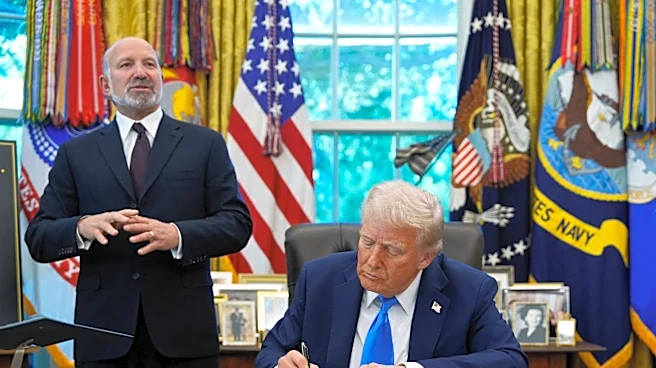
A federal judge has invalidated a $100,000 fee imposed by President Trump on new H-1B visas, ruling it as an unauthorized tax. The decision was made by U.S. District Judge Leo Sorokin in Boston, following a lawsuit filed by 20 Democratic state attorneys
general. The fee, announced in September, significantly increased the cost of obtaining H-1B visas, which are crucial for tech companies to hire foreign skilled workers. The Trump administration argued that the fee was a lawful penalty under immigration law, which allows the president to restrict foreign nationals' entry if deemed detrimental to U.S. interests. However, Judge Sorokin concluded that the fee was a tax that lacked congressional authorization, referencing a Supreme Court ruling that struck down Trump's tariffs under similar reasoning.
Why It's Important?
The ruling has significant implications for U.S. immigration policy and the tech industry, which heavily relies on H-1B visas to recruit skilled foreign workers. The decision challenges the Trump administration's broader immigration strategy aimed at prioritizing U.S. citizens over foreign workers. The fee had discouraged H-1B visa applications, with only 85 payments received by February. This ruling may lead to increased visa applications and ease the hiring process for tech companies. It also underscores the legal limitations of executive power in imposing taxes without congressional approval, potentially influencing future immigration and economic policies.
What's Next?
The Trump administration is expected to appeal the ruling, as indicated by White House spokesperson Taylor Rogers. The case may proceed to higher courts, where the administration will argue for the president's authority to impose such fees. The outcome of the appeal could set a precedent for executive power in immigration policy. Meanwhile, the tech industry and other stakeholders will closely monitor the developments, as the decision impacts their ability to hire foreign talent. The ruling also opens the door for further legal challenges to other immigration policies implemented by the Trump administration.