







What's Happening?
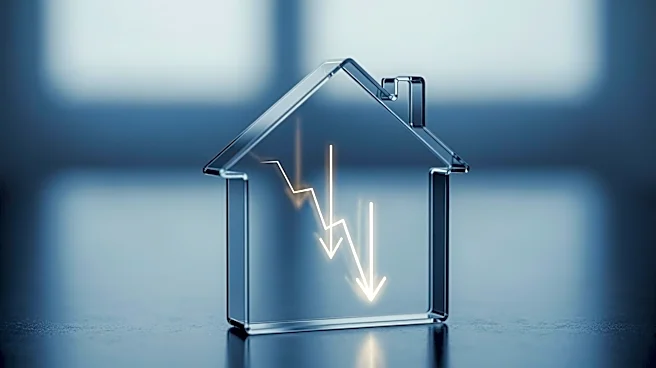
Savills, a property consultancy, has adjusted its forecast for UK house prices, predicting a rise of 18.5% by 2030, down from an earlier estimate of 22.2%. This revision is attributed to geopolitical instability in the Middle East, which has impacted
inflation and mortgage pricing. The consultancy anticipates that higher borrowing costs will limit transaction levels and constrain price growth in the near term. The forecast also considers the impact of increased regulation leading landlords to exit the market, particularly affecting prices in London and the South East. Despite these challenges, Savills expects certain factors, such as less stretched affordability compared to 2022 and the widespread use of fixed-rate mortgages, to mitigate the risk of forced sales.
Why It's Important?
The revised forecast by Savills highlights the broader economic implications of geopolitical events on the housing market. The anticipated rise in mortgage rates and inflation could affect affordability for potential homebuyers, leading to reduced demand and slower price growth. This situation could have significant consequences for the real estate sector, particularly in regions like London and the South East, where prices are already high. The forecast also underscores the importance of regulatory environments and their impact on market dynamics, as seen with landlords exiting the market due to increased regulation. The potential for a V-shaped recovery suggests that while short-term pressures exist, there may be opportunities for growth in the medium term.
What's Next?
Savills anticipates that the most significant pressure on house prices will occur over the summer when interest rates are expected to peak. The consultancy projects a gradual recovery beginning in 2027, with average house prices increasing by £67,000 over the five years to 2030. Regional variations are expected, with the North of England, Scotland, and Wales likely to outperform due to stronger affordability cushions. The main risk to this forecast is a prolonged conflict in the Middle East, which could lead to sharper inflation and interest rate rises, potentially exacerbating short-term pressures on house prices.