



What's Happening?
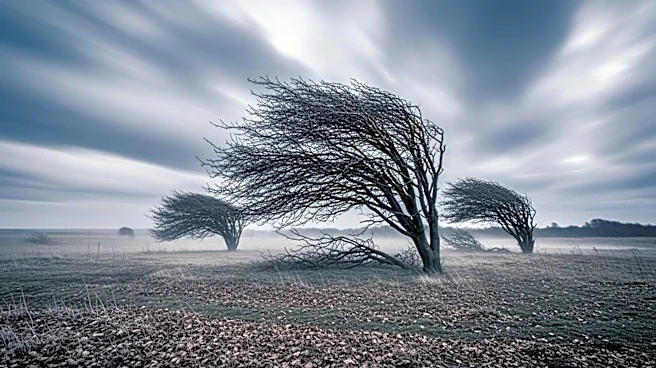
The National Weather Service (NWS) has issued high wind warnings across several western U.S. states, including Oregon, Washington, Idaho, Utah, Nevada, and Montana. These warnings, effective from early Wednesday, caution residents about powerful winds
capable of tipping over trucks, knocking down trees and power lines, and causing widespread power outages. The NWS advises people to stay indoors, avoid windows, and remain in the lower levels of their homes. The warnings are particularly critical for drivers of high-profile vehicles, such as semi-trailers and RVs, due to the increased risk of tipping over in winds reaching 40 to 50 mph, with gusts up to 80 mph. The warnings are expected to last over 24 hours in some areas, with the potential for significant damage and travel disruptions.
Why It's Important?
The high wind warnings have significant implications for public safety and infrastructure across the affected states. The potential for power outages could disrupt daily life and business operations, while the risk of falling trees and debris poses a direct threat to personal safety and property. The warnings also highlight the vulnerability of transportation networks, particularly for freight and logistics sectors reliant on road transport. The situation underscores the importance of emergency preparedness and the need for residents and businesses to heed official advisories to minimize risks. Additionally, the unusual timing of these winds in May, typically seen in winter months, raises concerns about changing weather patterns and their impact on regional climates.
What's Next?
As the high wind warnings continue, residents and businesses in the affected areas are advised to monitor updates from the NWS and local authorities. Emergency services and utility companies are likely to be on high alert to respond to power outages and infrastructure damage. The warnings may also prompt discussions among policymakers and environmental scientists about the implications of such weather events and the need for adaptive strategies to mitigate their impact. In the short term, the focus will be on ensuring public safety and restoring normalcy once the winds subside.