








What's Happening?
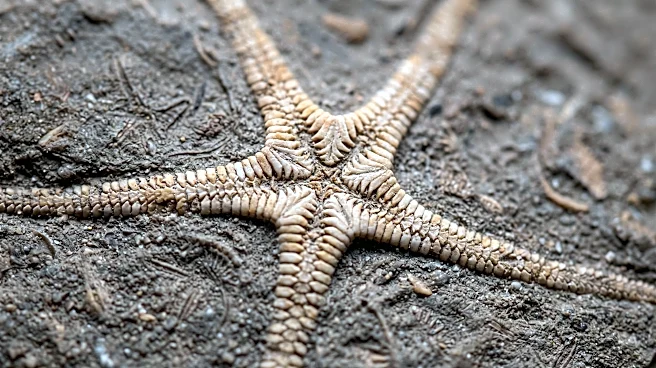
Paleontologists in Denmark have identified a new species of brittle star, *Ophiura huebnerjenseni*, from a 9.5-million-year-old whale carcass found in the Gram Clay Pit. This discovery marks the first fossil evidence globally of brittle stars associating
with whale falls in shallow-water environments during the Miocene epoch. Researchers, including Mette Elstrup and Trine Sørensen of the Museum of Southern Jutland, and Ben Thuy and Lea D. Numberger-Thuy from Luxembourg and Germany respectively, found tiny skeletal plates of the brittle stars concentrated exclusively in sediment samples taken directly beside the whale bones. This specific distribution suggests that these ancient marine invertebrates gathered around the deceased whale, likely taking advantage of the large food source it provided. The species has been named in honor of Holger Hübner and Thomas Jensen, founders of Germany’s Wacken Open Air heavy metal festival, with a geological connection noted between the festival's muddy grounds and the ancient marine clays preserving the fossils.
Why It's Important?
This discovery significantly enhances the understanding of ancient marine ecosystems and food webs during the Miocene epoch. It provides a rare fossil perspective on how opportunistic animals responded to substantial food sources on ancient shallow-water seabeds, a phenomenon previously observed primarily in modern deep-sea whale falls. The findings suggest that the ecological interaction of scavenging on whale carcasses is not a recent development but has roots millions of years in the past. By studying such interactions, scientists gain crucial insights into the evolution of ecological niches and how marine life adapted to environmental changes over geological timescales. This research contributes to a broader picture of Earth's biological history, illustrating the long-standing role of large organic falls in supporting diverse marine communities.
What's Next?
Future research will likely focus on further investigating the feeding behaviors and habitat specialization of *Ophiura huebnerjenseni*. While the current evidence strongly suggests an association with whale falls, it does not definitively establish what the brittle stars ate or if they relied exclusively on dead whales. Scientists may seek additional fossil records or comparative studies with modern brittle star species to gain a more complete understanding of their diet and ecological role. The distinction between shallow-water and deep-sea whale fall communities also opens avenues for further exploration into the specific conditions and successional stages of life that develop around carcasses in different marine environments. This could lead to a more nuanced reconstruction of ancient marine ecosystems.
Beyond the Headlines
The naming of the new brittle star species, *Ophiura huebnerjenseni*, after the founders of the Wacken Open Air festival, highlights an unusual intersection of scientific discovery and popular culture. This cultural connection, alongside the geological link between the fossil site's ancient marine clay and the festival's renowned mud, adds a unique layer to the scientific narrative. It underscores how diverse elements can converge in scientific exploration and public engagement. Furthermore, the study's emphasis on the opportunistic nature of these brittle stars, rather than strict specialization, offers a broader ecological lesson about adaptability and resource utilization in ecosystems, both ancient and modern. This flexibility in resource exploitation is a key factor in species survival and ecological resilience.