






What's Happening?
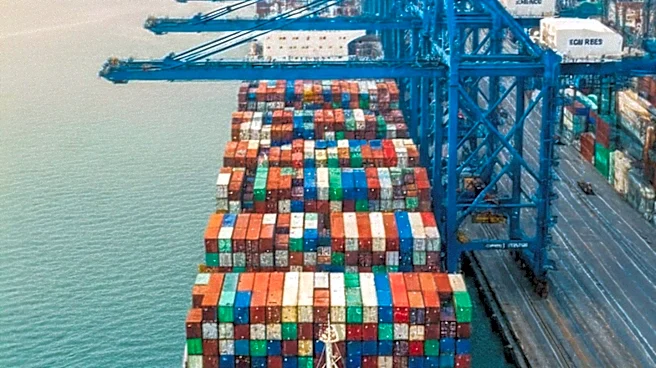
The Lowy Institute, an Australian think tank, has raised concerns regarding the future of China's Gwadar Port project in Pakistan. The institute's analysis suggests that the port, once touted as a cornerstone of the China-Pakistan Economic Corridor (CPEC)
and a key component of Beijing’s Belt and Road Initiative, has failed to become the major regional commercial hub it was promised to be. Instead, the project is increasingly viewed as a financial and security liability. Security challenges in Balochistan, where the port is located, have led to repeated attacks on Chinese citizens and CPEC-linked infrastructure by Baloch separatist groups. These security issues, coupled with geographical challenges, weak local infrastructure, and Pakistan's economic difficulties, have hindered the port's commercial transformation. The Lowy Institute argues that China's risk appetite for such projects is diminishing as it faces its own economic pressures, leading to a more cautious approach towards Gwadar.
Why It's Important?
The struggles of the Gwadar Port project carry significant implications for China's broader Belt and Road Initiative (BRI) and its global infrastructure investment strategy. The project was intended to showcase how Chinese investment could transform remote regions and create new trade routes, potentially offering an alternative to the vulnerable Malacca Strait for Chinese goods and energy supplies. Its failure to achieve commercial success and its escalating security costs could lead China to re-evaluate its approach to large-scale overseas infrastructure projects, potentially favoring smaller, more sustainable ventures. For Pakistan, the underperformance of Gwadar Port means that the anticipated economic benefits and revenue generation have not materialized, leaving the country with significant debt obligations and an underperforming strategic asset. This situation exacerbates Pakistan's existing balance-of-payments crisis and its reliance on external financing, including from China and the IMF. The strained relationship between Beijing and Islamabad due to the security burden also highlights the geopolitical complexities and risks associated with such ambitious cross-border initiatives.
What's Next?
The Lowy Institute's assessment suggests that while China is unlikely to immediately withdraw from Gwadar, its future involvement will likely involve a significantly reduced commercial ambition. Beijing may shift its focus towards maintaining a smaller, heavily protected facility with potential naval refuelling functions, rather than pursuing the original vision of a bustling commercial hub. This could also lead to a restructuring of the lease agreement in the longer term. For Pakistan, the challenge remains to address the security environment in Balochistan and develop the necessary commercial ecosystem around the port to attract cargo and shipping lines. The continued gap between diplomatic announcements and on-the-ground activity indicates that the CPEC dream, as originally envisioned for Gwadar, faces an uncertain future. China's evolving overseas investment strategy, moving towards more selective and financially sustainable projects, will further influence the trajectory of Gwadar and similar BRI initiatives.
Beyond the Headlines
The difficulties faced by the Gwadar Port project underscore deeper issues related to large-scale infrastructure development in politically unstable regions. The project's failure to gain adequate local support, due to perceptions that the Baloch population has not received sufficient economic benefits, highlights the critical importance of community engagement and equitable distribution of project benefits. This lack of local buy-in can fuel opposition and exacerbate security challenges, turning infrastructure into a target rather than a catalyst for development. Furthermore, the strategic value of Gwadar, initially touted for its commercial potential, may increasingly pivot towards military or logistical functions if commercial activity remains limited. This shift could raise concerns among regional and international actors regarding China's long-term strategic intentions in the Indian Ocean, potentially altering geopolitical dynamics. The case of Gwadar serves as a cautionary tale for other nations considering large-scale infrastructure partnerships, emphasizing the need for thorough risk assessments that go beyond economic projections to include security, social, and environmental factors.