







What's Happening?
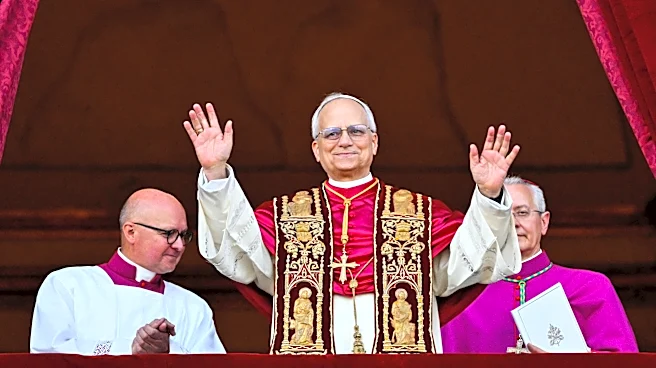
Pope Leo XIV is confirmed to be 'personally enthusiastic' and 'clinically fit' for his upcoming November 6-17 trip to Latin America, despite undergoing lung cancer surgery just over three weeks prior. Vatican communicators, including Holy See Press Office
director Matteo Bruni and Maria Montserrat Alvarado, the new prefect of the Vatican Dicastery for Communication, affirmed the Pope's health during a November 3 briefing. The trip marks Pope Leo's first papal visit to Latin America and will involve nine public Masses, visits to seven cathedrals, and two stadium prayer vigils across 12 days. Alvarado, the first laywoman prefect of the Vatican dicastery, emphasized the Pope's excitement and gratitude for prayers, stating that no changes to the itinerary are planned due to his recent medical procedure. Bruni clarified that the surgery does not create a permanent condition and no special medical accommodations or equipment are required for the journey, drawing a comparison to Pope Francis, who traveled extensively despite missing part of a lung.
Why It's Important?
This papal visit holds significant importance for several reasons. For the Catholic Church, it demonstrates the resilience and dedication of its leader, Pope Leo XIV, in fulfilling his pastoral duties despite recent health challenges. His commitment to the extensive itinerary, which includes numerous public engagements, sends a powerful message of faith and perseverance to millions of Catholics in Latin America and worldwide. The trip is also a homecoming for Pope Leo, who has Peruvian citizenship and whose missionary work in the region shaped his vision for the universal Church. This personal connection is expected to resonate deeply with the local populations, fostering a stronger sense of unity and spiritual connection. Furthermore, the visit aims to deliver a message of peace, encounter, and dialogue, particularly in countries like Uruguay, which is highly secularized, and Argentina, described as 'a wounded Argentina, a divided Argentina.' The Pope's presence and message could contribute to healing and reconciliation in these regions.
What's Next?
Pope Leo XIV's journey to Latin America is scheduled to commence on November 6, with a flight from Rome to Montevideo, Uruguay. The itinerary includes stops in Uruguay, Argentina, and Peru, with the Pope traveling to a new destination almost daily. Key events include a Mass at the National Shrine of Our Lady of the Thirty-Three in Florida, Uruguay, and engagements in Argentina, where he will navigate the legacy of Pope Francis. In Peru, he will visit Lima, Chiclayo, Santa Cruz de Succhabamba, and Cusco, including a military helicopter flight to the Andes mountain town of Santa Cruz de Succhabamba. The trip will culminate with his return to Chiclayo, Peru, where he previously served as bishop. Vatican officials have assured that medical care will be available throughout the journey, though no specific precautions are deemed necessary. The focus will be on the Pope's message of peace and encounter, and his ability to connect with diverse communities across the continent.
Beyond the Headlines
The Pope's decision to proceed with such a demanding schedule so soon after lung cancer surgery highlights a broader theme of leadership and resilience in the face of personal adversity. It underscores the immense pressure and dedication associated with the papacy, where personal health often takes a backseat to spiritual and pastoral responsibilities. The emphasis on his 'enthusiasm' and 'clinical fitness' also reflects the Vatican's strategic communication efforts to reassure the faithful and the international community about the Pope's capacity to lead. This event could also spark discussions about the physical demands placed on elderly religious leaders and the balance between their well-being and their extensive duties. Furthermore, the appointment of Maria Montserrat Alvarado as the first laywoman prefect of the Vatican Dicastery for Communication, and her prominent role in this briefing, signifies a continuing evolution within the Vatican's administrative structure, potentially paving the way for greater lay involvement in high-level positions.