



What's Happening?
The U.S. Department of Defense has issued a request for information (RFI) seeking aircraft capable of transporting oversized cargo, including space launch vehicles up to 300 feet in length. This initiative is part of a congressional report on future large
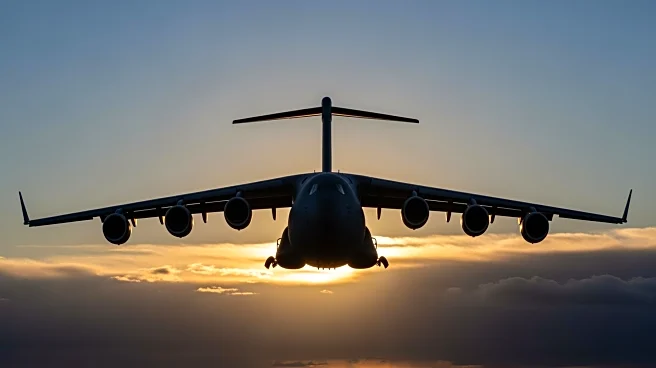
and oversized air cargo transportation capabilities, authorized by the Fiscal Year 2026 National Defense Authorization Act. Radia, a company developing the WindRunner outsize cargo aircraft, has responded to this RFI. The WindRunner is designed to transport large items such as wind-turbine blades and military equipment, including CH-47s and V-22s, without reassembly. The aircraft is notable for its size, with a length of 356 feet and a wingspan of 261 feet, and is designed to operate from short and unprepared runways.
Why It's Important?
The development of an aircraft capable of transporting oversized military cargo is crucial for the U.S. Department of Defense as it seeks to enhance its logistical capabilities. The ability to move large equipment efficiently is vital for military readiness and response times. The WindRunner's potential to carry significant payloads without reassembly could streamline operations and reduce deployment times. Additionally, the aircraft's design to operate from shorter runways increases its versatility in various operational environments. This initiative reflects the Department of Defense's commitment to modernizing its air mobility fleet, which is essential for maintaining strategic advantages in global military operations.
What's Next?
Radia is moving from the conceptual design phase to preliminary design, with plans to have the WindRunner operational by 2030. The U.S. Transportation Command is interested in acquiring between 2,000 to 7,500 flight hours on such an aircraft for 2 to 5 years post-operational status. As the U.S. Air Force defines its future air mobility fleet, the WindRunner could serve as a bridge to the Next-Generation Airlift family of systems. The ongoing development and potential integration of the WindRunner into military logistics highlight the evolving needs and strategies of the U.S. military in addressing future challenges.