




What's Happening?
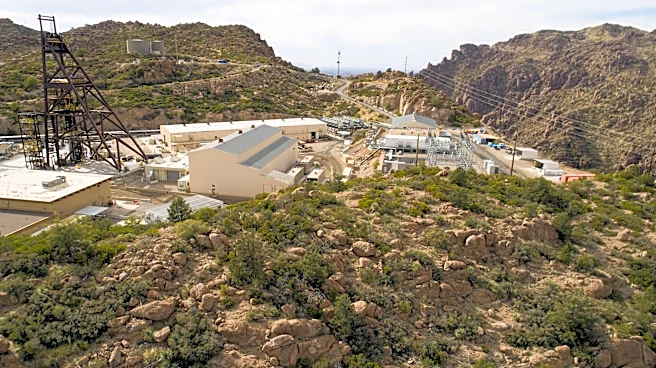
More than 6,500 individuals from Madagascar have initiated a legal claim in London's High Court against the British-Australian mining company Rio Tinto. The lawsuit alleges that the company's QIT Madagascar Minerals (QMM) mineral sands operation caused
contamination, exposing villagers to dangerous levels of lead and uranium. The claimants, including over 2,000 children, assert that acidic wastewater containing uranium, lead, and other metals was discharged into local lakes and waterways. These water sources are reportedly used by the community for essential activities such as drinking, cooking, washing, and irrigation. Law firm Leigh Day, representing the claimants, stated that communities near the mine have previously protested against water releases from the site into the surrounding environment. Rio Tinto has acknowledged notification of the claim but stated that it has not yet received the specific details of the lawsuit.
Why It's Important?
This lawsuit highlights significant concerns regarding environmental responsibility and corporate accountability within the global mining industry, particularly for U.S. companies and investors involved in international operations. The allegations of lead and uranium contamination, especially affecting a large number of children, raise serious public health and human rights issues. For U.S. businesses operating abroad, this case underscores the increasing scrutiny and legal risks associated with environmental impacts and community relations. It could influence how U.S. companies assess and manage environmental, social, and governance (ESG) risks in their overseas ventures, potentially leading to stricter internal guidelines and greater transparency. The outcome of such a high-profile case could also set precedents for environmental litigation against multinational corporations, impacting their operational costs, reputation, and access to capital from socially conscious investors. It emphasizes the need for robust environmental safeguards and community engagement in resource extraction projects worldwide.
What's Next?
Rio Tinto has stated it has not yet received the full details of the claim, indicating that the initial phase will involve the formal exchange of legal documents. Following this, the company will likely conduct an internal review of the allegations and prepare its defense. The legal proceedings in London's High Court are expected to be complex and potentially lengthy, involving extensive evidence gathering, expert testimonies, and legal arguments regarding causation, liability, and damages. Both parties will likely engage in discovery processes to uncover relevant information. The case could proceed to trial, or there might be attempts at mediation or settlement discussions. The outcome will be closely watched by other mining companies, environmental advocacy groups, and communities affected by industrial operations globally, as it could influence future legal strategies and corporate practices concerning environmental contamination and community welfare.
Beyond the Headlines
The lawsuit against Rio Tinto extends beyond immediate legal and financial implications, touching upon deeper ethical and cultural dimensions of resource extraction in developing nations. It brings to the forefront the power imbalance between large multinational corporations and local communities, often leading to environmental injustices. The case could reignite debates about the adequacy of international environmental regulations and the enforcement mechanisms for corporate social responsibility. Furthermore, it highlights the long-term health consequences for communities living near mining sites, particularly the vulnerability of children to toxic exposure. The legal battle may also influence consumer and investor perceptions of 'responsible sourcing' and 'ethical mining,' potentially driving demand for greater transparency and accountability throughout the supply chain. This situation underscores the ongoing challenge of balancing economic development with environmental protection and human well-being in a globalized economy.