
What's Happening?
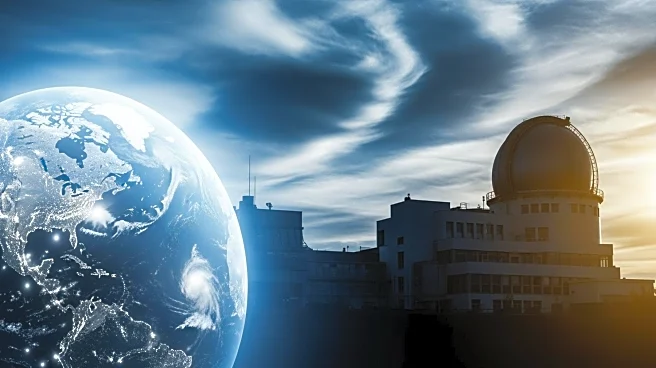
The Trump administration announced plans to dismantle the National Center for Atmospheric Research (NCAR) in Boulder, Colorado, citing concerns about 'climate alarmism.' The decision, announced by Russell
Vought, director of the White House Office of Management and Budget, has been criticized by Democratic state officials and scientists as an attack on science and education. NCAR, established in 1960, is a leading institution for earth and atmospheric research, providing valuable data and resources for climate science. The dismantling of NCAR is seen as a significant loss for scientific research and education, with potential impacts on weather forecasting and climate modeling.
Why It's Important?
The dismantling of NCAR could have far-reaching implications for climate science and public safety. NCAR plays a crucial role in advancing climate research and providing data for weather forecasts, which are essential for disaster preparedness and response. The decision reflects broader political debates over climate change and the role of science in informing policy. The move may hinder the ability of scientists to conduct research and collaborate on global climate issues, potentially affecting the U.S.'s leadership in climate science and its ability to address environmental challenges.
What's Next?
The decision to dismantle NCAR may face legal and political challenges from state officials and scientific organizations. Efforts to relocate vital research activities to other entities or locations may be explored, but the loss of NCAR's resources and expertise could have long-term impacts on climate research. The situation may prompt discussions about the role of government in supporting scientific research and the importance of evidence-based policy-making in addressing climate change.
Beyond the Headlines
The dismantling of NCAR raises ethical and cultural questions about the value placed on scientific research and the role of government in supporting or undermining scientific institutions. It highlights the tension between political agendas and scientific integrity, as well as the potential consequences of prioritizing short-term political goals over long-term scientific and environmental needs. The decision may also impact the next generation of scientists and the future of climate research in the U.S.