


What's Happening?
Dr. Efrat Sopher, an expert on Iran and the Gulf states, has highlighted the increasing challenges faced by the Iranian regime, particularly in light of rising women-led protests. As the Head of the International Task Force on Iran and Radical Islam at the World
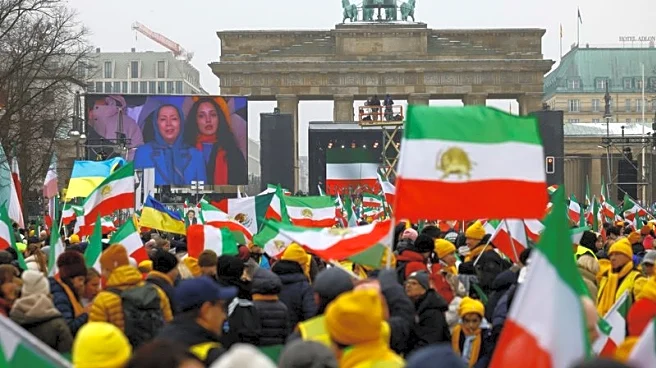
Jewish Congress, Dr. Sopher emphasizes the regime's focus on self-preservation over the well-being of its citizens. She notes the brutal measures employed by the regime to maintain control, including the use of mercenaries against civilians. The protests, led by women, signify a resurgence of female leadership in Iran, reminiscent of historical figures like Queen Esther.
Why It's Important?
The growing protests in Iran, particularly those led by women, represent a significant challenge to the regime's authority. This movement could potentially lead to substantial social and political changes within the country. The involvement of women in leadership roles during these protests highlights a shift in societal dynamics and a push for greater gender equality. The regime's response to these protests will be crucial in determining its future stability and the potential for reform. The international community, including policymakers and human rights organizations, will likely pay close attention to these developments.
What's Next?
The future of the Iranian regime remains uncertain as protests continue to gain momentum. The international community may increase pressure on the regime to address human rights concerns and consider reforms. The potential for change is further underscored by the support for figures like Crown Prince Reza Pahlavi, who advocates for a more open and democratic Iran. The regime's ability to navigate these challenges will be critical in shaping the country's political landscape and its relations with the global community.