




What's Happening?
The Cuban Ministry of Public Health (MINSAP) has officially acknowledged the simultaneous and active transmission of dengue and chikungunya viruses across all provinces in Cuba. Dr. Madelaine Rivera Sánchez, national director of Surveillance and Antivectorial
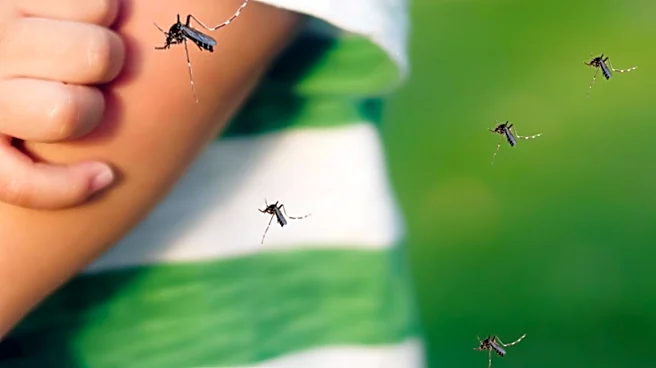
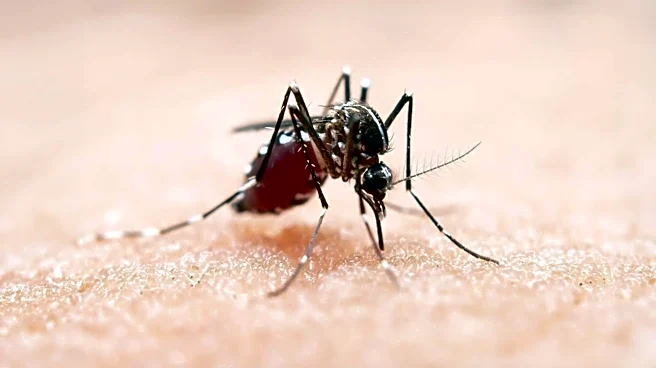
Control, confirmed that dengue is currently the more prevalent disease. The situation is particularly complex in Pinar del Río, Matanzas, Villa Clara, Ciego de Ávila, the special municipality Isla de la Juventud, Santiago de Cuba, and Guantánamo, which reported higher incidence rates in statistical week 44. Chikungunya reemerged in Cuba in July 2025 after a decade without detected transmission, leading to an epidemic that resulted in 51,217 reported cases and 46 associated deaths by the end of 2025, according to the Pan American Health Organization (PAHO). The MINSAP attributes the challenges in vector control to the country's economic situation, specifically a severe fuel shortage that has hampered fumigation efforts. As a partial solution, some fumigation equipment has been modified to use water instead of diesel, prioritizing high-transmission areas. The strategy has also shifted towards larviciding and, to a lesser extent, adulticiding.
Why It's Important?
This widespread arbovirus transmission in Cuba carries significant public health implications, particularly given the country's close proximity and travel ties to the United States. While the immediate impact is on the Cuban population, the reemergence and uncontrolled spread of chikungunya, alongside persistent dengue, pose a potential risk for importation into the U.S. through travelers. The fuel crisis in Cuba, which directly impedes vector control measures like fumigation, highlights how economic instability can exacerbate public health crises. The shift to water-based fumigation and increased larviciding indicates an adaptive, albeit constrained, response to resource limitations. For U.S. public health agencies, this situation necessitates heightened surveillance for imported cases and public awareness campaigns for travelers to Cuba. The inability to effectively control mosquito populations due to external factors like fuel shortages underscores the interconnectedness of global health and economic stability, potentially impacting U.S. healthcare resources if outbreaks were to occur domestically.
What's Next?
The MINSAP will continue its modified fumigation efforts, prioritizing areas with higher transmission rates, and will maintain active surveillance for other arboviruses like Zika and Oropouche, though no confirmed cases have been reported for these in 2026. The effectiveness of the water-based fumigation and increased larviciding in curbing the spread of dengue and chikungunya remains to be seen, especially as the fuel crisis persists. The structural issues, such as prolonged blackouts affecting water supply and leading to household water storage, will likely continue to create mosquito breeding grounds, complicating control efforts. International health organizations, including PAHO, will likely continue to monitor the situation closely and may offer further assistance. Travelers to Cuba will need to remain vigilant regarding mosquito bite prevention, and U.S. health authorities will likely continue to advise precautions and monitor for potential imported cases.
Beyond the Headlines
The ongoing arbovirus crisis in Cuba, exacerbated by the fuel shortage, illustrates a critical intersection of public health, economic policy, and environmental factors. The reliance on diesel for essential public health services like fumigation exposes vulnerabilities in national infrastructure to external economic pressures. This situation could serve as a case study for other nations facing similar resource constraints in managing vector-borne diseases. Furthermore, the public's role in preventing mosquito breeding by covering water containers and participating in sanitation efforts becomes paramount when governmental control measures are limited. This highlights the importance of community engagement and education in public health strategies, especially in resource-scarce environments. The long-term implications of climate change, which can expand the geographical range and breeding seasons of Aedes aegypti mosquitoes, could further complicate such public health challenges globally, making effective and sustainable vector control strategies even more crucial.