


What's Happening?
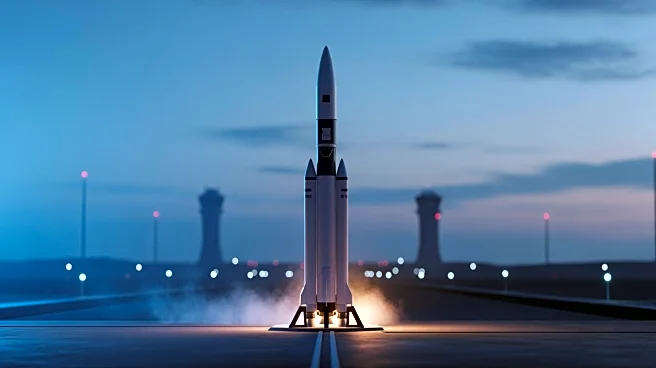
NASA has announced a new target date of March 6 for the launch of the Artemis 2 mission, which aims to send a four-person crew around the moon. This decision follows a successful wet dress rehearsal (WDR) that tested the Space Launch System (SLS) rocket
and Orion spacecraft. The rehearsal involved fueling the rocket and practicing astronaut seating procedures. NASA officials, including Lori Glaze, acting associate administrator for NASA’s Exploration Systems Development Mission Directorate, expressed confidence in the upcoming launch, pending final reviews and completion of remaining tasks. The Artemis 2 crew, consisting of NASA astronauts Reid Wiseman, Victor Glover, Christina Koch, and Canadian Space Agency astronaut Jeremy Hansen, has entered quarantine in preparation for the mission. The mission will be the first crewed flight for the SLS and Orion, setting the stage for future lunar landings under the Artemis program.
Why It's Important?
The Artemis 2 mission is a critical step in NASA's broader Artemis program, which aims to return humans to the moon and eventually establish a sustainable presence there. This mission will test the integrated systems of the SLS rocket and Orion spacecraft with human occupants, providing valuable data for future missions, including Artemis 3, which plans to land astronauts on the lunar surface. The success of Artemis 2 is vital for maintaining momentum in U.S. space exploration efforts and for demonstrating the capabilities of NASA's new spaceflight systems. However, the program faces scrutiny over its high costs, with estimates suggesting each launch could exceed $4 billion. The mission's success could bolster support for continued investment in space exploration, while any setbacks might fuel criticism regarding the program's financial sustainability.
What's Next?
Following the successful completion of the wet dress rehearsal, NASA will conduct a multiday flight readiness review to ensure all systems are prepared for the March 6 launch. If any issues arise, the launch could be postponed to later dates in March or even April. The Artemis 2 mission will involve a 10-day journey, including a trans-lunar injection burn and a return trajectory that uses Earth's gravity for reentry. The mission's outcomes will influence the planning and execution of Artemis 3, which aims to land astronauts at the lunar south pole. The space industry and federal government will closely monitor the mission, as its success could impact future funding and policy decisions related to space exploration.