






What's Happening?
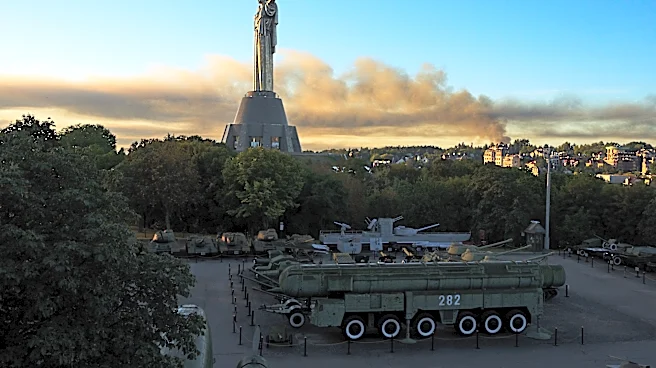
Kurt Cobb, a columnist for OilPrice, has drawn attention to the significant consumption and loss of strategic metals in modern warfare and advanced technologies. These critical minerals are essential not only for defense applications like night-vision
systems, radars, and precision weapons but also for civilian high-tech manufacturing, including solar panels, wind turbines, electric vehicles, and semiconductors. Cobb notes that materials from destroyed military equipment are often difficult or economically unfeasible to recycle, leading to a permanent loss from circulation. He specifically highlighted germanium, a metal with both military and civilian uses, referencing a claim that the drone war in Ukraine consumes 4% of global germanium demand, though he could not verify this estimate. The increasing demand for these minerals for electronics, renewable energy, and defense technologies necessitates expanded extraction, which in turn requires more energy and resources as deposits with lower concentrations are increasingly targeted. For instance, half of all copper mined globally by 2018 was extracted between 2000 and 2018, and lithium extraction rates surged by 2,539% from 1970 to 2022.
Why It's Important?
The escalating demand and non-recoverable loss of strategic metals pose a critical challenge for both U.S. national security and its economic future. The reliance on these materials for advanced military hardware means that their depletion or restricted access could compromise defense capabilities and technological superiority. Economically, the U.S. high-tech manufacturing sector, which depends heavily on these minerals for products ranging from electric vehicles to renewable energy infrastructure, faces potential supply chain vulnerabilities and increased costs. The shift to lower-concentration deposits for extraction implies higher energy consumption and environmental impact, which could lead to increased production expenses and geopolitical competition for resource-rich regions. Furthermore, the inability to efficiently recycle these metals from destroyed equipment exacerbates the problem, creating a linear consumption model that is unsustainable in the long term. This situation underscores the need for strategic planning in resource management, including investment in domestic extraction, alternative material research, and advanced recycling technologies to secure critical supply chains and maintain technological leadership.
What's Next?
Addressing the challenges highlighted by Cobb will likely involve a multi-faceted approach from U.S. policymakers and industries. Expect increased focus on securing supply chains for strategic metals, potentially through international agreements, domestic mining incentives, and investments in exploration. Research and development into alternative materials that can substitute for these critical minerals, or into more efficient extraction and recycling methods, will also become paramount. The U.S. government may consider strategic stockpiling of key metals to mitigate supply disruptions, especially given their dual-use nature in both defense and civilian sectors. Furthermore, there could be a push for greater transparency and accountability in global mineral supply chains to ensure ethical sourcing and reduce reliance on potentially unstable regions. The ongoing conflicts, such as the war in Ukraine, will continue to underscore the urgency of these issues, potentially accelerating policy decisions aimed at enhancing resource resilience and technological independence.
Beyond the Headlines
Beyond the immediate concerns of supply and demand, the issue of strategic metal consumption touches upon deeper ethical and environmental considerations. The increased extraction of these minerals often comes with significant environmental costs, including habitat destruction, water pollution, and energy-intensive processing, raising questions about sustainable development and corporate responsibility. The geopolitical implications are also profound, as competition for these finite resources can fuel international tensions and conflicts, particularly with countries that dominate their production or processing. The 'unverifiable' claim about germanium consumption in the Ukraine war, even if unconfirmed, highlights the opaque nature of military resource consumption and the difficulty in assessing its true environmental and economic impact. This situation could also accelerate the development of 'circular economy' principles within the defense and technology sectors, pushing for designs that facilitate easier recycling and reuse of components. Ultimately, the long-term sustainability of modern technological advancement and national security will depend on a fundamental shift in how these critical resources are managed, from extraction to end-of-life.