






What's Happening?
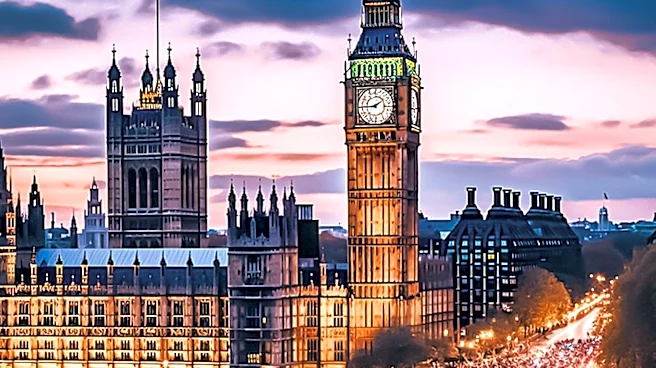
London, the capital of England, is a city rich in history and diverse culture, situated along the River Thames. Founded by the Romans around 47 AD, it has evolved into a major global destination. The city boasts numerous iconic landmarks such as the London Eye,
the Shard, Buckingham Palace, and the Houses of Parliament. Beyond its historical sites, London offers modern attractions and green spaces like the Sky Garden, and opportunities for recreational activities such as kayaking on the River Thames. The city is a blend of ancient heritage and contemporary vibrancy, attracting visitors from around the world. Its extensive history is evident in its architecture and institutions, while its modern infrastructure and cultural scene keep it at the forefront of global cities. London also serves as a significant economic and cultural center, influencing various sectors globally.
Why It's Important?
London's status as a global capital makes it a significant player in international affairs, culture, and economy. Its historical depth, combined with its modern appeal, draws millions of tourists annually, contributing substantially to its economy through tourism and related industries. The city's financial district is a major global hub, impacting international markets and business trends. Culturally, London is a melting pot, influencing global trends in art, fashion, and entertainment. Its universities and research institutions are world-renowned, contributing to advancements in science and technology. The city's political significance as the capital of the United Kingdom also means decisions made there have far-reaching implications, affecting international relations and global policies. The continuous influx of diverse populations enriches its cultural fabric and fosters innovation.
What's Next?
London continues to evolve as a major global city, with ongoing developments in infrastructure, cultural offerings, and economic initiatives. Future plans often focus on sustainable urban development, enhancing public transport, and expanding its cultural and entertainment sectors to maintain its appeal to both residents and tourists. The city is also a hub for technological innovation, with continuous growth in its tech sector, suggesting further advancements in smart city initiatives and digital services. As a leading financial center, London will likely continue to adapt to global economic shifts, maintaining its competitive edge through policy adjustments and investment in emerging industries. Its role in international diplomacy and trade is also expected to remain prominent, with ongoing engagement in global discussions and partnerships.
Beyond the Headlines
Beyond its immediate attractions, London represents a complex interplay of historical legacy and modern challenges. The city grapples with issues common to major global metropolises, such as housing affordability, social inequality, and environmental sustainability. Its diverse population, while a source of strength, also presents challenges in terms of integration and social cohesion. The preservation of its historical sites alongside rapid modernization requires careful urban planning and policy-making. London's cultural influence extends beyond tourism, shaping global perceptions and trends in various fields. The city's resilience in adapting to historical events and contemporary pressures underscores its enduring significance as a global urban model, offering insights into the complexities of managing a diverse, dynamic, and historically rich metropolis.