
What's Happening?
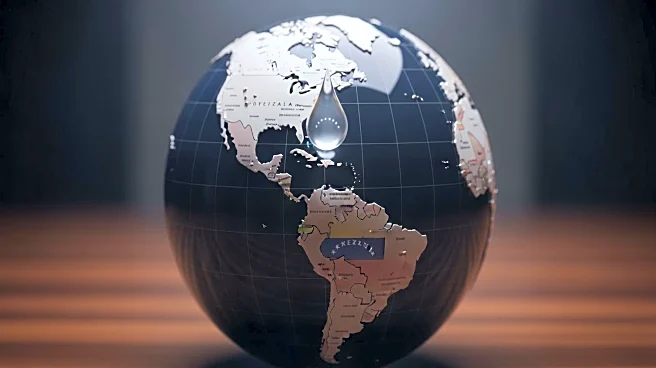
President Trump is navigating a complex diplomatic situation involving Venezuela's oil resources, which are partially controlled by China due to longstanding contracts. As the U.S. asserts control over
Venezuelan oil shipments, it faces the challenge of managing China's significant financial interests in the region. China is owed approximately $10 billion by Venezuela, a debt that was being repaid through oil shipments. The U.S. has begun seizing Venezuelan oil tankers and plans to sell the oil, with proceeds intended to benefit the Venezuelan people. This move is part of a broader strategy to reduce foreign influence in the Western Hemisphere, particularly from adversarial nations. The situation is further complicated by President Trump's upcoming visit to Beijing, where he aims to maintain a fragile trade truce with Chinese President Xi Jinping.
Why It's Important?
The U.S. actions in Venezuela could have significant implications for international relations and trade dynamics. By asserting control over Venezuelan oil, the U.S. is challenging China's economic interests in the region, which could strain diplomatic relations. This situation also highlights the broader geopolitical struggle for influence in Latin America, a region where China has been expanding its presence through investments and loans. The outcome of this situation could affect global oil markets, U.S.-China trade relations, and the political landscape in Venezuela. Additionally, the U.S.'s approach to handling foreign influence in its hemisphere could set a precedent for future international engagements.
What's Next?
President Trump's visit to Beijing in April will be a critical moment for U.S.-China relations, as both countries seek to stabilize trade relations while managing their interests in Venezuela. The interim Venezuelan government, aligned with Washington, may challenge the legality of the oil-for-loans agreements with China, potentially ceasing payments. This could lead to further diplomatic tensions between the U.S. and China. Additionally, the U.S. will continue to manage the sale of Venezuelan oil, with the goal of redirecting proceeds to support the Venezuelan population. The international community will be closely watching these developments, as they could influence global economic and political dynamics.
Beyond the Headlines
The U.S.'s actions in Venezuela could have long-term implications for its foreign policy and international standing. By taking a strong stance against foreign influence in the Western Hemisphere, the U.S. is reinforcing its commitment to regional stability and sovereignty. However, this approach may also lead to increased tensions with other global powers, particularly China, which has significant economic interests in the region. The situation also raises questions about the future of U.S.-China relations, as both countries navigate complex trade and diplomatic challenges. The outcome of this situation could influence the global balance of power and shape future international engagements.