




What's Happening?
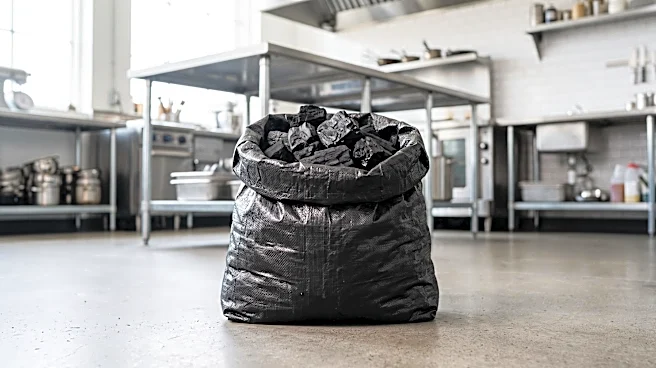
Roy Hanks, a man cooking chicken for Hana Hawaiian BBQ in Nahiku, Maui, discovered a dead snake inside a bag of charcoal. His wife, Sharon Fillazar-Hanks, initially thought it was a prank until she saw a picture confirming the discovery. The Maui Police
Department was contacted and subsequently reached out to the Hawaii Department of Agriculture Quarantine Division. Officials from the Department of Agriculture & Biosecurity (DAB) stated that the snake was likely deceased during the packaging process in its state or country of origin. They noted that similar incidents have occurred with baled hay, where snakes seek shelter, are killed during processing, and then unintentionally shipped to Hawaii. Based on photographs, state officials believe the snake is likely a nonvenomous rat snake, though some speculated it could be a juvenile copperhead.
Why It's Important?
This incident highlights the ongoing biosecurity challenges faced by Hawaii, a state with a unique and fragile ecosystem highly vulnerable to invasive species. The accidental importation of a dead snake, even if nonvenomous, underscores the potential pathways for live invasive species to enter the islands. Hawaii has strict quarantine laws to protect its native flora and fauna, as invasive species can devastate local ecosystems, agriculture, and public health. The discovery prompts concerns about the effectiveness of current import screening processes for common goods like charcoal. While this particular snake was dead, a live snake could establish a breeding population, leading to significant ecological and economic damage, as snakes have no natural predators in Hawaii and could decimate bird populations.
What's Next?
The Hawaii Department of Agriculture Quarantine Division will likely continue to investigate the origin of the charcoal bag and review import procedures to prevent similar occurrences. While the immediate threat from this dead snake is minimal, the incident serves as a reminder for increased vigilance at all points of entry. Public awareness campaigns about reporting unusual animal sightings will likely be reinforced. The focus will remain on strengthening biosecurity measures to safeguard Hawaii's environment from future invasive species introductions, potentially leading to stricter regulations or enhanced inspection protocols for imported goods, particularly those from regions known to harbor such species.
Beyond the Headlines
The discovery of the dead snake in a charcoal bag touches upon the broader issue of global supply chain vulnerabilities and their ecological implications. As goods are transported across vast distances, the risk of inadvertently moving organisms, both harmful and benign, increases. This incident, while seemingly minor, reflects the constant battle Hawaii faces to preserve its biodiversity against the pressures of global commerce. It also raises ethical questions about the responsibility of manufacturers and shippers to ensure their products are free from biological contaminants. The cultural significance of Hawaii's unique environment further amplifies these concerns, as the introduction of foreign species can disrupt not only ecological balance but also traditional practices and the overall quality of life for residents.