






What's Happening?
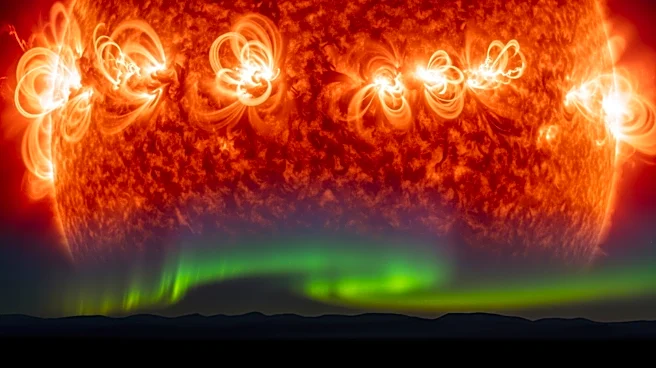
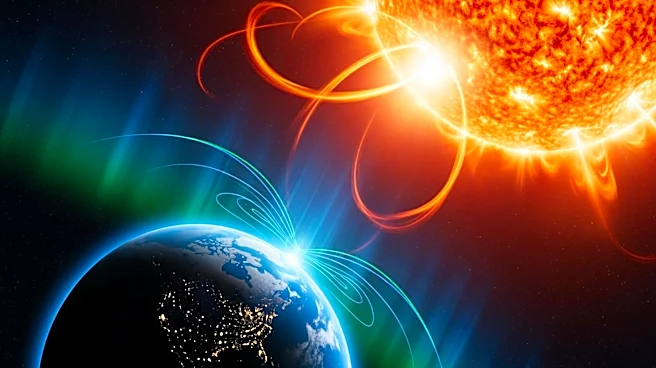
The National Oceanic and Atmospheric Administration (NOAA) has issued a G3 geomagnetic storm warning due to multiple coronal mass ejections (CMEs) heading towards Earth. These CMEs, originating from sunspot region 4455, are expected to merge into a 'cannibal
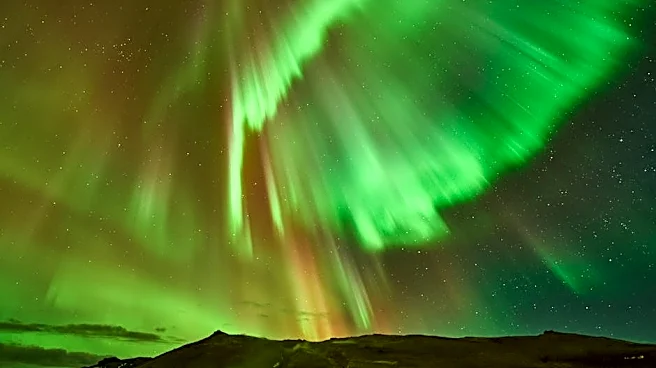
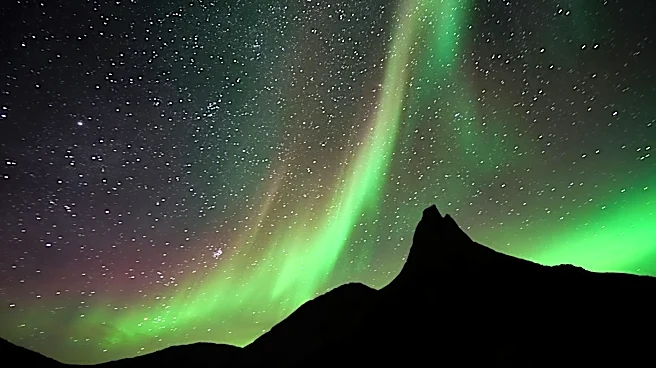
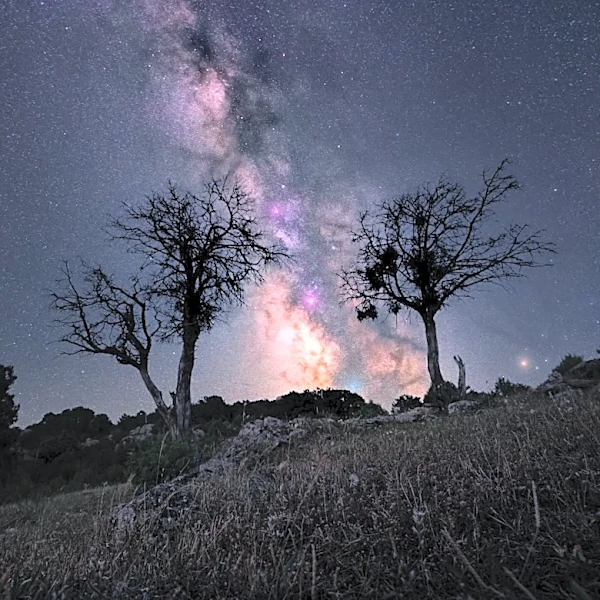
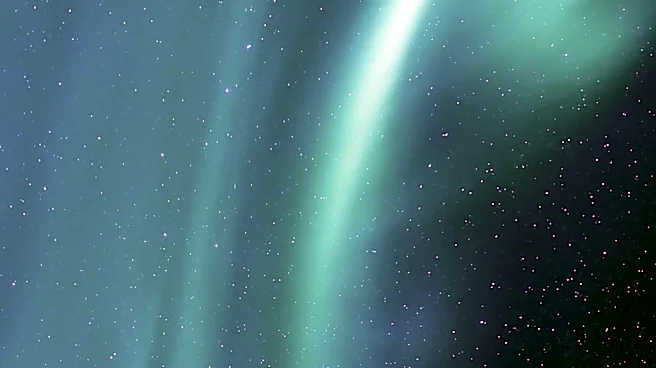
CME,' potentially intensifying the storm's impact. The geomagnetic storm could make auroras visible as far south as Illinois and Oregon. The strongest geomagnetic activity is anticipated between the evening of June 4 and the early hours of June 5, with peak conditions expected during specific hours. The storm's timing and intensity remain uncertain due to the complex nature of the incoming CMEs.
Why It's Important?
Geomagnetic storms can have significant effects on Earth's magnetosphere, impacting satellite operations, GPS systems, and power grids. The potential visibility of auroras in mid-latitudes presents a rare opportunity for skywatchers in the U.S. to witness this natural phenomenon. The event underscores the importance of space weather forecasting in mitigating the risks associated with solar activity. Understanding and predicting such events are crucial for protecting technological infrastructure and ensuring the safety of space-based operations.
What's Next?
As the CMEs approach, scientists will continue to monitor the situation closely, adjusting forecasts as necessary. The public is advised to stay informed through NOAA updates. In the longer term, this event may prompt further research into the behavior of CMEs and their interactions with Earth's magnetic field, potentially leading to improved predictive models for space weather events.