



What's Happening?
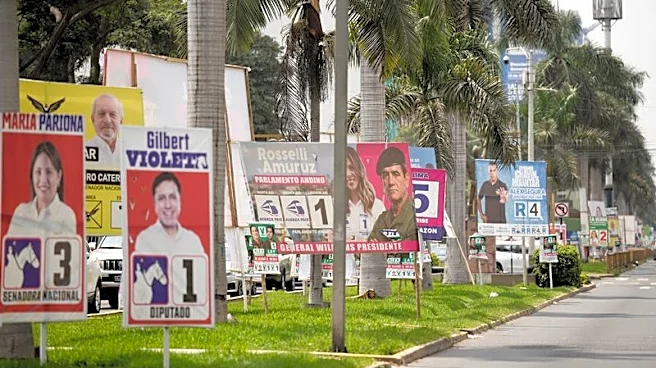
Peruvians are voting in a presidential election with over 30 candidates, following years of political instability. The election is marked by a lack of a clear frontrunner, making a runoff likely. This situation arises amid rising crime rates and geopolitical
tensions between the United States and China. The election features candidates from across the political spectrum, including Keiko Fujimori, Ricardo Belmont, and Carlos Alvarez, each with distinct platforms addressing crime and economic stability. The election is crucial for Peru, a major copper producer, as it navigates internal and external challenges.
Why It's Important?
The election is significant due to Peru's political instability, having cycled through eight presidents since 2018. This instability has eroded public trust in political institutions, complicating governance and decision-making. The outcome will impact Peru's economic policies, especially concerning its relationship with China, its largest trading partner. The election also affects U.S. interests, as Washington seeks to strengthen ties with Peru amid China's growing influence. The new administration will face challenges in addressing crime and economic issues, with implications for regional stability and international relations.
What's Next?
Following the election, a runoff is expected, prolonging political uncertainty. The new president will need to navigate a fractured Congress and a reinstated Senate, complicating legislative efforts. The focus will be on addressing crime and economic challenges, with potential shifts in foreign policy. The election results will influence Peru's geopolitical stance, particularly its relations with China and the U.S. Stakeholders, including political leaders and international observers, will closely monitor the developments, assessing the implications for regional dynamics and global partnerships.