



What's Happening?
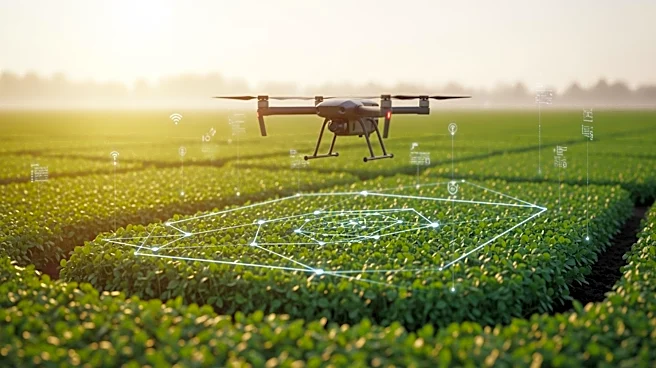
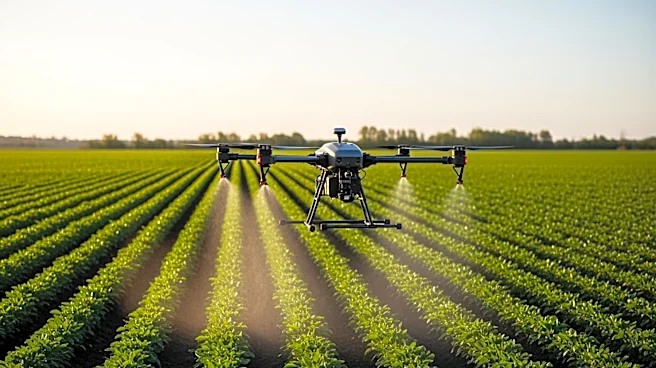
In the European Union, drones are emerging as a pivotal tool in modern agriculture, offering precision application capabilities that enhance sustainability and productivity. These Unmanned Aerial Spray Systems (UASS) allow farmers to conduct field scouting,
pest pressure mapping, and site-specific treatments with remarkable accuracy. The technology enables interventions in challenging terrains, such as steep vineyard slopes or muddy fields, where traditional machinery might fail. Despite their potential, drones face regulatory hurdles in the EU, where they are classified under aerial spraying regulations, limiting their widespread adoption.
Why It's Important?
The integration of drones into agriculture represents a significant advancement in precision farming, promising substantial environmental benefits. By reducing water consumption and carbon emissions, drones contribute to more sustainable agricultural practices. However, the regulatory challenges highlight the need for updated policies that accommodate technological innovations. The EU's ability to adapt its regulations will determine its competitiveness in the global agricultural market, as other regions have already embraced drone technology.
What's Next?
The EU faces a critical opportunity to modernize its regulations through the Food and Feed Safety Omnibus, which could facilitate the broader adoption of drone technology. A harmonized regulatory framework across member states is essential to ensure a level playing field and support innovation. The development of a clear roadmap for drone applications, including interim measures and data requirements, will be crucial for enabling farmers to fully leverage this technology.
Beyond the Headlines
The push for drone technology in agriculture reflects a broader trend towards digital and precision farming, driven by the need for sustainable food production. This shift underscores the importance of science and innovation in addressing global challenges such as food security and environmental sustainability. The successful integration of drones into agricultural practices could serve as a model for other sectors seeking to balance productivity with ecological responsibility.