




What's Happening?
Luis and Carlos Orta-Santoro, 19-year-old twin brothers and recent Archer High School graduates, were detained by Immigration and Customs Enforcement (ICE) after a traffic stop in Lincoln, Alabama, on November 4. The brothers, who are freshmen at a college
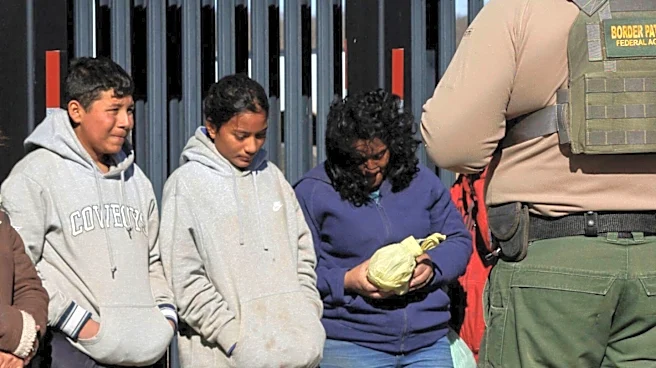
in Alabama and play for Wallace State Community College's soccer team, were pulled over for rolling through a stop sign. Although initially issued a warning, the encounter escalated to an arrest and an immigration hold. They were subsequently taken to the Pickens County Detention Center in Alabama and are currently at the Pine Prairie ICE Processing Center in southern Louisiana. The twins, originally from Venezuela, have pending asylum applications, no criminal records, and work permits valid until 2030. However, ICE has reportedly stated that their temporary permission to stay had expired. The detention has prompted a strong reaction from the Archer High School community, with friends and family organizing a 5K event and a GoFundMe campaign to support their legal fees.
Why It's Important?
The detention of the Orta-Santoro twins highlights the ongoing impact of immigration enforcement policies on individuals and communities across the U.S. The incident underscores the complexities of immigration law, particularly concerning individuals with pending asylum applications and valid work permits whose temporary permissions to stay may be subject to different interpretations or expirations. The involvement of a 287(g) agreement in Lincoln, Alabama, which allows local law enforcement to cooperate with ICE, demonstrates how federal immigration enforcement can intersect with routine traffic stops, leading to significant consequences for non-citizens. This event also galvanizes community activism, as seen with the Archer High School community's efforts to advocate for the twins' release and raise awareness about their situation. The case could draw further attention to the broader debate surrounding immigration policies, local law enforcement's role in federal immigration matters, and the humanitarian concerns associated with family separations and detentions.
What's Next?
The Orta-Santoro family and their supporters are actively working to secure the twins' release, including raising funds for legal fees through a GoFundMe campaign and organizing a 5K event to raise awareness. The twins are currently held at the Pine Prairie ICE Processing Center in Louisiana, and their legal team will likely pursue avenues to challenge their detention and address the status of their asylum applications and work permits. The community's advocacy efforts may put pressure on ICE and other relevant authorities to review the case. This incident could also reignite discussions within the Archer High School community and potentially other areas with similar demographics about the need for policies to protect students from federal immigration enforcement, as previously attempted by students at Archer High School. The outcome of their case could set a precedent or influence future immigration enforcement actions and community responses.
Beyond the Headlines
The detention of the Orta-Santoro twins extends beyond a singular immigration incident, touching upon deeper ethical and legal considerations within the U.S. immigration system. The reported shackling of the brothers during transfers, described by one as being treated 'like animals,' raises concerns about the humane treatment of detainees and the protocols followed during their transport. This narrative contributes to a broader discourse on the dignity of individuals within the immigration enforcement process. Furthermore, the community's swift and organized response, including fundraising and awareness campaigns, illustrates the powerful role of social networks and local support systems in mitigating the impact of immigration detentions. It also highlights the emotional toll such events take on families and communities, fostering a sense of fear and uncertainty among immigrant populations, even those with legal protections like work permits and pending asylum claims. The case implicitly questions the balance between national security interests and the protection of individual rights and due process for non-citizens.