




What's Happening?
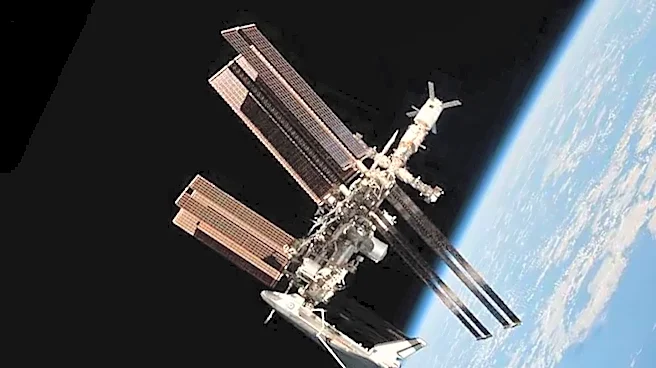
Astronauts aboard the International Space Station (ISS) continue the tradition of celebrating Halloween in orbit. Despite the absence of traditional trick-or-treaters, crew members engage in festive activities, often designing creative costumes from materials
available on the station. This practice has been documented over several years, with various expeditions showcasing their Halloween spirit. Past celebrations have included astronauts dressing as superheroes, popular characters, and even historical figures like Elvis Presley. These events highlight the human element of long-duration space missions and the efforts made to maintain morale and a sense of normalcy in an extraordinary environment. The ISS remains a critical scientific platform, providing essential research capabilities for future human exploration of the universe.
Why It's Important?
The celebration of holidays like Halloween on the International Space Station is important for several reasons. Firstly, it contributes significantly to crew morale and psychological well-being during extended missions far from Earth. Maintaining a positive and engaging environment is crucial for the mental health of astronauts, which directly impacts their performance and the success of scientific endeavors. Secondly, these activities offer a relatable glimpse into the lives of astronauts, fostering public interest and engagement in space exploration. By sharing these human moments, NASA and other space agencies can inspire future generations in STEM fields. Lastly, it underscores the adaptability and resourcefulness of astronauts, who creatively utilize limited resources to create meaningful experiences, a skill vital for future deep-space missions.
What's Next?
The tradition of celebrating holidays on the International Space Station is expected to continue as long as human presence is maintained in orbit. Future expeditions will likely find new and innovative ways to mark special occasions, further enriching the cultural and social fabric of spaceflight. As space agencies plan for longer-duration missions to the Moon and Mars, the lessons learned from maintaining crew morale and fostering a sense of community on the ISS will be invaluable. These experiences will inform the development of psychological support systems and recreational activities for future deep-space explorers, ensuring their well-being and operational effectiveness in increasingly isolated and challenging environments.
Beyond the Headlines
Beyond the immediate festivities, the practice of celebrating holidays in space reflects a deeper human need for connection, tradition, and normalcy, even in the most extreme environments. It highlights the psychological challenges of long-duration spaceflight and the importance of addressing them proactively. These seemingly small acts of celebration contribute to a robust and resilient crew dynamic, essential for collaborative scientific work and emergency preparedness. Furthermore, the public sharing of these moments helps to demystify space travel, making it more accessible and relatable to a global audience. It reinforces the idea that while astronauts are scientists and explorers, they are also individuals who cherish cultural traditions and human connection, bridging the gap between the extraordinary and the everyday.