





What's Happening?
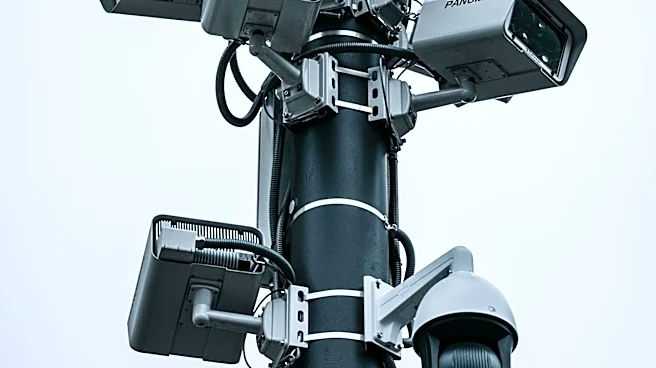
The Florida Department of Transportation (FDOT) has issued an order for local law enforcement agencies to remove automated license plate readers (ALPRs) from state highway rights-of-way within 30 days. This directive comes amidst growing concerns regarding
data privacy, potential misuse of the technology, and the rapid expansion of surveillance networks. Governor Ron DeSantis has publicly stated his view that the use of these cameras is 'out of control,' emphasizing the need to prevent Florida from becoming a 'surveillance state' while still supporting law enforcement tools for crime investigation. FDOT will also cease approving future requests for ALPR installations within state highway rights-of-way and will remove any devices that remain after the deadline. The decision follows an 'exponential increase' in ALPR deployments and several reported instances of officers misusing the collected data for personal reasons, such as tracking estranged spouses or former romantic partners.
Why It's Important?
This action by FDOT and Governor DeSantis highlights a critical tension between public safety and individual privacy rights in the digital age. The widespread deployment of ALPR technology, while credited by law enforcement for solving crimes and locating missing persons, raises significant concerns about mass surveillance and the potential for abuse. The order to remove these cameras from state roads reflects a growing public and governmental apprehension about the unchecked collection and retention of citizens' movement data. This move could set a precedent for other states grappling with similar issues, influencing future legislation and policies regarding surveillance technologies. It also underscores the importance of establishing clear safeguards and accountability mechanisms for technologies that collect sensitive personal information, ensuring that law enforcement tools are used responsibly and within legal and ethical boundaries. The debate also brings to the forefront the need for an 'artificial intelligence bill of rights,' as suggested by Governor DeSantis, to address the broader implications of advanced surveillance technologies.
What's Next?
Local law enforcement agencies in Florida now have a 30-day window to comply with the FDOT order and remove ALPRs from state highway rights-of-way. After this period, FDOT will take action to remove any remaining devices. The debate surrounding ALPRs and surveillance technology is expected to continue, with the Florida Legislature likely to address the issue further. Governor DeSantis has called for legislative action and an artificial intelligence bill of rights, indicating that more comprehensive regulations may be on the horizon. While police departments acknowledge the cameras' utility in solving crimes, they will need to adapt their investigative methods or seek alternative solutions for vehicle tracking. Privacy advocates will likely continue to push for stronger safeguards and limitations on surveillance technologies. Flock Safety, a major provider of ALPRs, has already announced new safeguards to detect and limit misuse, such as mandatory audit assistance systems and reduced data retention periods, but these measures may not fully address the broader concerns about widespread data collection.
Beyond the Headlines
The controversy surrounding ALPRs in Florida extends beyond immediate privacy concerns, touching upon fundamental questions about the nature of a free society and the role of technology in governance. The 'surveillance state' rhetoric used by Governor DeSantis reflects a deep-seated American value of individual liberty and a distrust of pervasive government monitoring. This situation highlights the ethical dilemmas posed by technologies that can create a searchable record of people's movements, potentially chilling free association and expression. The reported instances of misuse by law enforcement officers underscore the human element in technological systems and the need for robust oversight and accountability, regardless of the technology's capabilities. This debate is part of a larger national conversation about how to balance security needs with civil liberties in an increasingly data-driven world, potentially leading to new legal frameworks that define the boundaries of technological surveillance and protect citizens' digital rights.