
What's Happening?
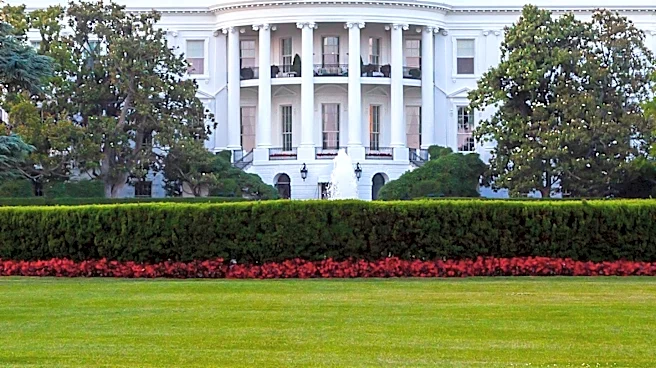
President Trump convened a summit at the White House on August 19, bringing together crypto executives and federal regulators to advocate for the passage of the Digital Asset Market Clarity Act (CLARITY
Act). This move comes ahead of a critical September 15 Senate procedural vote on the bill. The CLARITY Act aims to establish a comprehensive regulatory framework for digital assets, categorizing them as either securities under the SEC, commodities under the CFTC, or stablecoins under the existing GENIUS Act. The House passed its version of the bill in July 2025, and the Senate Banking Committee advanced its own version in May 2026. However, the bill has since stalled due to ethics disputes, a shrinking legislative calendar, and concerns related to President Trump's own crypto holdings. The White House summit, attended by prominent figures from the crypto industry and regulatory bodies, sought to build consensus and urgency for the bill's passage. This initiative follows the SEC's publication of Regulation Crypto Assets on August 18, a proposed rulemaking that outlines the agency's own framework for digital tokens, indicating a dual approach to crypto oversight through both legislative and regulatory channels.
Why It's Important?
The CLARITY Act is crucial for defining the future of cryptocurrency regulation in the United States. Its passage would provide much-needed clarity for digital asset markets, which currently operate under a patchwork of regulations and enforcement actions. By clearly delineating the jurisdictional boundaries between the SEC and CFTC, the bill aims to reduce regulatory uncertainty, foster innovation, and protect investors. The current lack of a unified federal framework has led to compliance headaches for global platforms and potential arbitrage opportunities due to differing classifications of tokens across jurisdictions. The bill's outcome will determine whether the U.S. maintains its position as a leader in crypto innovation or cedes ground to other nations with more established regulatory environments. Furthermore, the debate surrounding the CLARITY Act highlights the ongoing tension between legislative action and agency-led rulemaking in shaping the digital asset landscape, with significant implications for market stability and investor confidence.
What's Next?
The immediate focus is on the September 15 cloture vote in the Senate. This procedural vote requires 60 senators to vote in favor for the CLARITY Act to advance to full Senate debate, overcoming any potential filibuster. Senate Majority Leader John Thune filed cloture on August 8, indicating the urgency of the vote. For the bill to pass, at least 10 Democratic senators would need to cross party lines, a challenging prospect given the political dynamics of a midterm year and ongoing disputes, particularly concerning the bill's ethics provisions. If cloture fails, the bill's prospects for becoming law in 2026 would significantly diminish. Concurrently, the SEC's 60-day comment period for Regulation Crypto Assets will provide insights into the industry's reception of the agency's proposed framework. The CFTC's fiscal 2027 appropriations request of $410 million will also be a key indicator of whether Congress is prepared to adequately fund the agency's expanded mandate under the CLARITY Act, should it pass.
Beyond the Headlines
The CLARITY Act's journey underscores deeper implications for the U.S. financial system and its global standing. The bill's ethics provision, particularly concerning government officials' crypto holdings, has become a significant point of contention, raising questions about potential conflicts of interest and the integrity of regulatory processes. The debate also highlights a federalism concern, with state attorneys general and securities regulators expressing apprehension that the CLARITY Act could preempt state-level enforcement powers, potentially weakening consumer protection. Moreover, even if the CLARITY Act passes, significant areas of the crypto economy, such as decentralized finance protocols and non-fungible tokens, would remain without a dedicated federal framework, suggesting that a truly comprehensive regulatory approach will require ongoing legislative efforts. The market's positive reaction to the White House summit and the SEC's rulemaking indicates a maturing crypto market where regulatory clarity is increasingly viewed as a positive catalyst for institutional investment and broader adoption.