



What's Happening?
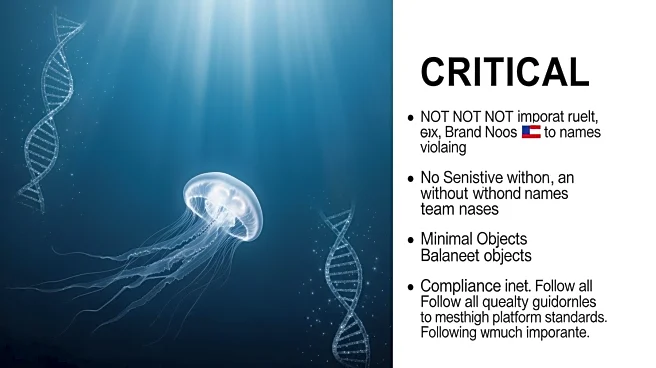
A recent study conducted by Bar-Ilan University (BIU) has revealed that sleep plays a crucial role in reducing DNA damage in jellyfish, suggesting that this function of sleep is an ancient evolutionary trait. The research, published in Nature Communications,
was led by Prof. Lior Appelbaum and Prof. Oren Levy. It focused on two ancient animal lineages: diurnal jellyfish and crepuscular sea anemones. The study found that DNA damage, which can arise from various sources such as neuronal activity and oxidative stress, increases the need for sleep. Conversely, sleep helps in reducing this damage, highlighting a bidirectional relationship. The findings suggest that sleep's ability to reduce neuronal DNA damage is a fundamental trait that may have been preserved across the animal kingdom.
Why It's Important?
This study underscores the fundamental role of sleep in maintaining neuronal health, which has implications for understanding sleep's evolutionary origins and its necessity in modern animals, including humans. The research suggests that sleep's primary function may be to provide a period for neuronal maintenance, reducing cellular stress and DNA damage. This insight is significant as it could inform the development of treatments for sleep disorders and related neurological conditions. Understanding sleep's evolutionary role could also lead to better management of sleep-related health issues, such as obstructive sleep apnea, which is linked to increased risks of neurological diseases like Parkinson's and Alzheimer's.
What's Next?
The researchers plan to extend their study to even older creatures, such as sponges, which lack neurons, to determine if they exhibit sleep-like behaviors. This could provide further insights into the evolutionary history of sleep. Additionally, the study's findings may prompt further research into the genetic and molecular mechanisms underlying sleep and its role in DNA repair. Such research could lead to new therapeutic approaches for sleep disorders and neurodegenerative diseases.
Beyond the Headlines
The study highlights the potential dangers of sleep deprivation, which can lead to increased DNA damage and cellular stress, potentially contributing to aging and disease. It also raises questions about the balance between sleep's protective functions and the vulnerability it introduces by reducing environmental awareness. This balance may have driven the evolution of diverse sleep patterns across species, such as unihemispheric sleep in birds and marine mammals, which allows them to rest while remaining partially alert.