






What's Happening?
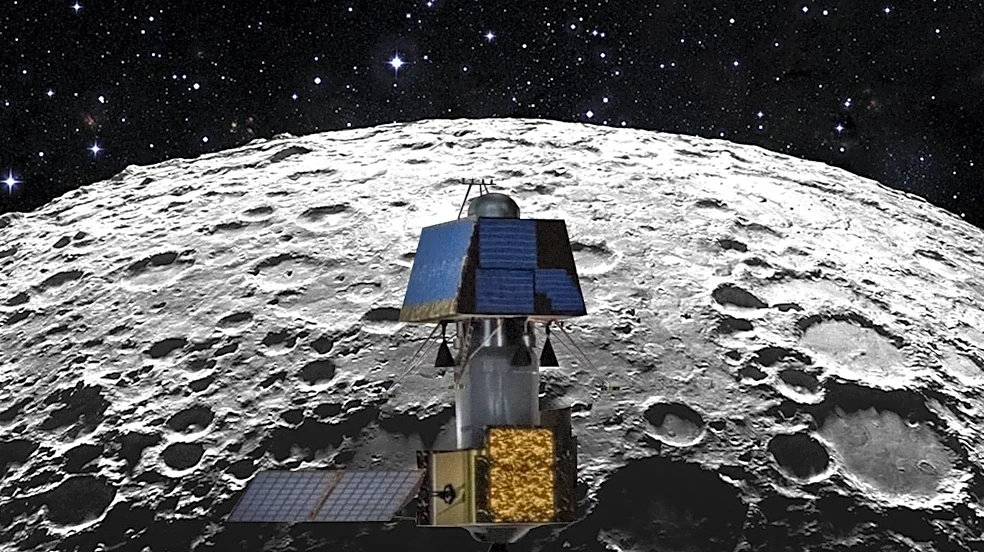
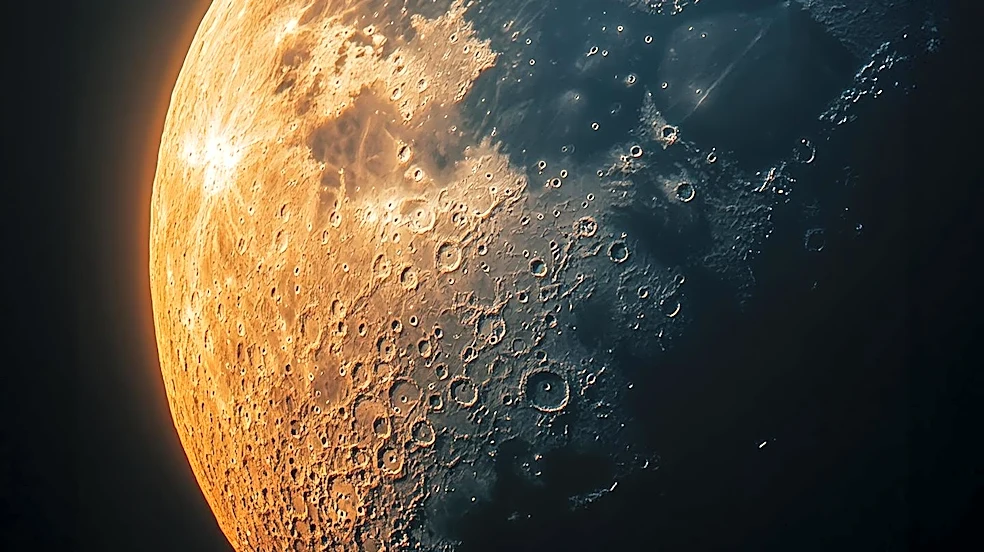
The Moon is gradually shrinking, a process that has led to the formation of over 10,000 young faults or cracks across its surface. This shrinkage is a result of the Moon's interior slowly cooling and contracting since its formation approximately 4.5 billion
years ago. Scientists, analyzing images from the Lunar Reconnaissance Orbiter Camera (LROC), have determined that the Moon's radius has decreased by about 148 feet (45 meters) over the past 400 to 800 million years. Unlike Earth, which has tectonic plates, the Moon has a single-plate body, meaning these faults are scattered across its entire surface rather than concentrated at plate boundaries. The study's lead, Thomas Watters, a geologist at the Smithsonian's National Air and Space Museum, noted the unexpectedly high number of these young faults, indicating ongoing contraction and fault formation.
Why It's Important?
The continuous shrinkage of the Moon and the resulting formation of faults have significant implications for future lunar missions and the establishment of permanent bases. These faults are a source of 'moonquakes,' which, while generally weaker than Earthquakes, could still pose a threat to structures and equipment on the lunar surface. Understanding the distribution and activity of these faults is crucial for selecting safe and stable locations for lunar outposts. The study also revealed that some areas of the Moon have thicker crust and fewer cracks, suggesting these regions might be more stable. This information is vital for mission planners to mitigate risks associated with seismic activity and ensure the longevity and safety of human presence on the Moon.
What's Next?
Further research will likely focus on more precisely mapping these lunar faults and monitoring their activity to better predict moonquakes. This data will be critical for informing the design and construction of future lunar habitats and infrastructure, ensuring they can withstand the Moon's ongoing geological changes. Space agencies and private companies planning lunar missions will need to incorporate these findings into their site selection processes, prioritizing areas identified as more geologically stable. Continued observation with advanced lunar orbiters and potential future seismic monitoring stations on the Moon's surface will provide more detailed insights into the Moon's internal processes and its implications for lunar exploration.
Beyond the Headlines
The discovery of widespread faulting due to lunar shrinkage highlights the dynamic nature of celestial bodies, even those seemingly geologically inactive. This ongoing contraction offers a unique natural laboratory for studying planetary evolution in the absence of plate tectonics. The Moon's internal cooling and contraction provide clues about its formation and thermal history, offering a deeper understanding of how rocky bodies in our solar system evolve. Furthermore, the challenges posed by moonquakes underscore the complex engineering and scientific considerations required for long-term space habitation, pushing the boundaries of materials science and structural design in extreme environments.