






What's Happening?
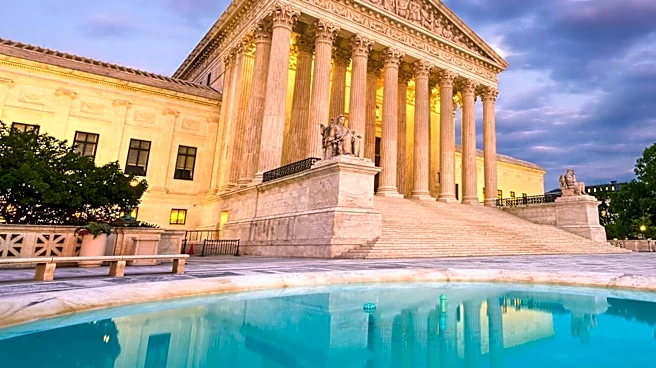
The U.S. Supreme Court has increasingly addressed the 'mosaic theory' in the context of Fourth Amendment protections against unreasonable searches and seizures. This legal premise suggests that while individual pieces of information may not, on their
own, constitute a search, their aggregation can reveal a detailed picture that implicates a legally protected interest. This theory is particularly relevant to prolonged or comprehensive government surveillance. The D.C. Circuit Court of Appeals first applied this theory in *United States v. Maynard* (2010), ruling that extended GPS surveillance constituted a Fourth Amendment search. Although the Supreme Court affirmed the judgment in *United States v. Jones* (2012) on a property/trespass theory, concurring opinions supported the privacy implications of long-term data collection. More recently, in *Carpenter v. United States* (2018), the Supreme Court held that acquiring extensive historical cell-site location information (CSLI) was a Fourth Amendment search, invading a reasonable expectation of privacy in one's physical movements. The Court's reasoning in *Carpenter* reflected the mosaic principle, emphasizing that comprehensive location data can reveal intimate details of an individual's life. The Supreme Court also addressed geofence warrants in *Chatrie v. United States* (2026), concluding that individuals have a reasonable expectation of privacy in cell phone location records, even when held by a third party and covering a limited timespan.
Why It's Important?
The Supreme Court's engagement with the mosaic theory is crucial for defining the scope of privacy rights in the digital age, particularly concerning government surveillance. As technology advances, law enforcement agencies have access to vast amounts of data that, when combined, can paint a comprehensive picture of an individual's life, habits, and associations. This raises significant questions about the balance between national security and individual liberties. The rulings in *Carpenter* and *Chatrie* establish precedents that could limit the government's ability to collect and aggregate digital data without a warrant, thereby strengthening Fourth Amendment protections. These decisions impact technology companies that collect user data, potentially requiring them to implement stricter data handling policies and cooperate with law enforcement under more stringent legal conditions. For civil liberties advocates, these cases represent a victory in safeguarding privacy against pervasive digital surveillance, while law enforcement agencies may face new challenges in conducting investigations that rely on aggregated data.
What's Next?
Future legal challenges are likely to further refine the application of the mosaic theory, especially as new surveillance technologies emerge. The Supreme Court's decision in *Chatrie v. United States* left open questions regarding the 'reasonableness' of specific geofence warrants, indicating that lower courts will continue to grapple with these complex issues. This suggests ongoing litigation to establish clearer guidelines for data aggregation and surveillance. Lawmakers may also consider legislative actions to codify or expand upon the privacy protections outlined in these Supreme Court decisions, potentially leading to new federal statutes governing data collection by government agencies. Technology companies will need to adapt their data collection and sharing practices to comply with evolving legal standards, which could involve implementing more robust privacy-by-design principles and increasing transparency with users about data usage. The debate between privacy advocates and national security interests is expected to continue, shaping future policies and legal interpretations.
Beyond the Headlines
The mosaic theory extends beyond immediate legal implications, touching upon fundamental societal values regarding privacy and autonomy. In an era where personal data is constantly generated and collected, the ability of the government to piece together seemingly innocuous bits of information to create a detailed profile raises ethical concerns about the erosion of individual freedom. The concept challenges the traditional understanding of what constitutes a 'search,' moving beyond physical intrusion to encompass the digital realm. This shift necessitates a re-evaluation of how society perceives and protects privacy in an increasingly interconnected world. The long-term impact could include a greater public demand for data privacy, influencing consumer behavior and driving innovation in privacy-enhancing technologies. It also highlights the ongoing tension between technological capability and legal frameworks, underscoring the need for continuous adaptation of laws to keep pace with technological advancements and their potential impact on civil liberties.