

What's Happening?
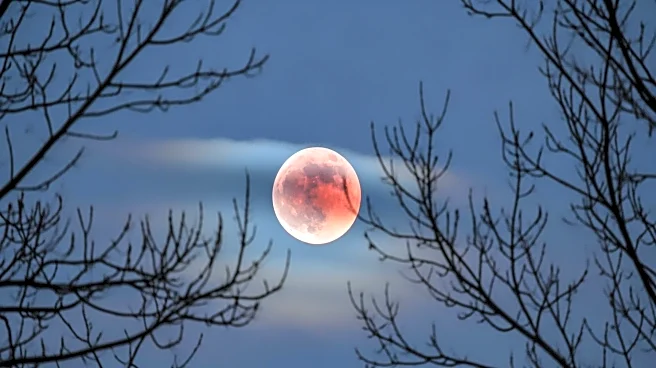
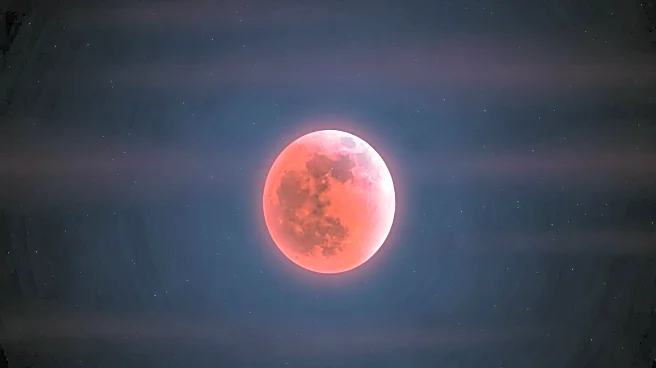
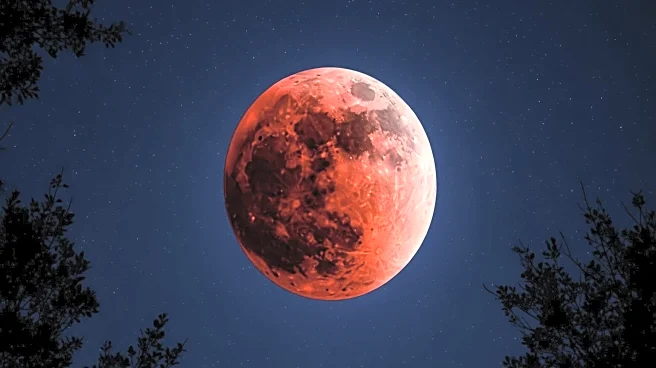
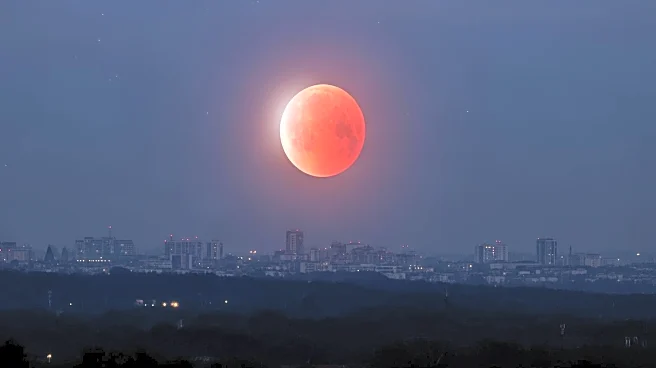
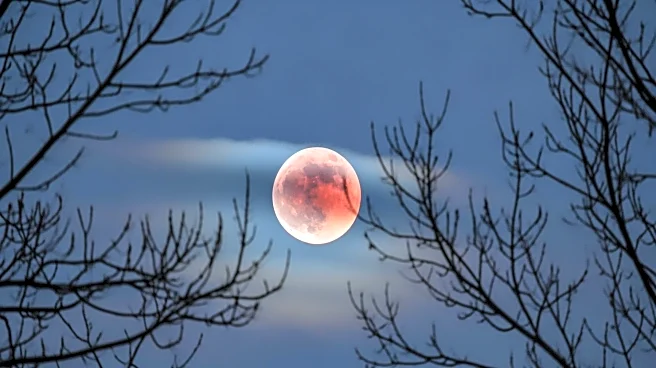
The first lunar eclipse of 2026 is set to occur on March 3, transforming the moon into a coppery red 'blood moon' visible to skywatchers across North America. This total lunar eclipse happens when the Earth positions itself between the moon and the sun,
causing the moon to fall into Earth's shadow. The only light reaching the moon is filtered through Earth's atmosphere, giving it a reddish hue. The eclipse will be visible across the night side of Earth, with the best views expected from the western half of North America, Australia, and the Pacific. Totality, the period when the moon is fully immersed in Earth's shadow, will last for 58 minutes, from 6:04 a.m. EST to 7:02 a.m. EST. Observers are advised to find locations with dark, clear skies for optimal viewing.
Why It's Important?
Lunar eclipses, particularly total ones, are significant astronomical events that attract skywatchers and scientists alike. This event provides an opportunity for educational outreach and public engagement in astronomy, fostering interest in space science. For researchers, the eclipse offers a chance to study the Earth's atmosphere and its effects on the moon's appearance. The visibility of the eclipse across large parts of North America means that millions will have the chance to witness this celestial phenomenon, potentially boosting interest in astronomy and related sciences. Additionally, such events can have cultural significance, often inspiring myths and stories across different societies.
What's Next?
As the date of the eclipse approaches, astronomers and enthusiasts will prepare for observation events and public viewings. Educational institutions and observatories may organize special programs to educate the public about lunar eclipses and their scientific importance. Following the eclipse, scientists may analyze data collected during the event to gain insights into atmospheric conditions and other related phenomena. The next steps will involve disseminating findings and engaging with the public to maintain interest in upcoming astronomical events.
Beyond the Headlines
Lunar eclipses can have deeper implications beyond their immediate visual spectacle. They serve as reminders of the interconnectedness of celestial bodies and the dynamic nature of the universe. The cultural impact of such events can be profound, influencing art, literature, and folklore. Additionally, the study of eclipses contributes to our understanding of Earth's atmosphere and its interactions with solar radiation, which can have implications for climate science. As technology advances, the ability to capture and analyze these events improves, offering new opportunities for scientific discovery.