
What's Happening?
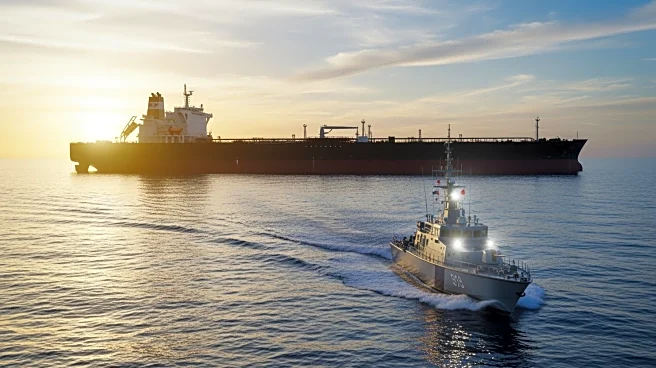
U.S. forces have initiated a maritime 'quarantine' around Venezuela, deploying warships, aircraft, and Marines in the Caribbean. This action, ordered by President Trump, aims to crack down on oil tankers
associated with Venezuelan President Nicolás Maduro. Approximately 15,000 personnel are involved, although exact figures have not been disclosed by the Pentagon. The operation involves stopping ships and inspecting cargo to prevent sanctioned fuel from being transported. A carrier strike group, F-35s, and Coast Guard cutters are positioned to intercept tankers, restrict oil exports, and exert pressure on Maduro's government. This move is part of a broader strategy to enforce sanctions and expand U.S. naval capabilities.
Why It's Important?
The U.S. maritime enforcement around Venezuela is significant as it represents one of the most extensive military actions under President Trump's administration. It underscores the U.S. commitment to enforcing sanctions against Venezuela, aiming to cut off revenue streams that allegedly fund corruption networks tied to Maduro. The operation could have economic implications, potentially causing fuel price spikes and affecting Caribbean importers and U.S. Gulf states. Additionally, it may lead to diplomatic challenges, as countries like Brazil and Mexico might seek alternative arrangements not aligned with U.S. policies. The action also signals a potential shift towards a more aggressive U.S. naval strategy, with plans for a shipbuilding expansion to project power globally.
What's Next?
The U.S. military's actions could lead to heightened tensions between Washington and Caracas, with the potential for maritime confrontations. Venezuelan officials have accused the U.S. of piracy and illegal interference, warning that any hostile act will be seen as aggression. The situation may escalate if tankers resist inspections or seek assistance from other nations' militaries. The U.S. administration's plans for a naval expansion, including the procurement of larger combatants and support vessels, could further influence future maritime enforcement strategies. The outcome of this operation may also impact U.S. relations with other countries in the region and shape future sanctions policies.
Beyond the Headlines
The U.S. maritime crackdown on Venezuelan oil tankers highlights broader geopolitical and legal challenges. It raises questions about the balance between enforcing international sanctions and respecting national sovereignty. The operation could set a precedent for future U.S. military interventions in international waters, potentially leading to legal disputes over the law of the sea. Additionally, the focus on expanding U.S. naval capabilities reflects a strategic shift towards maintaining dominance in global maritime operations, which could have long-term implications for international relations and defense policies.