




What's Happening?
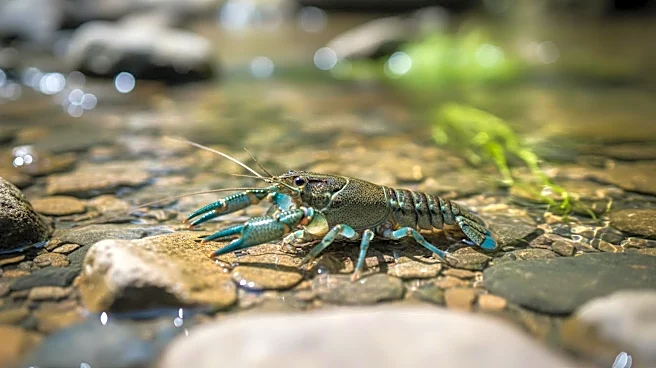
The U.S. Fish and Wildlife Service (FWS) is trialing a new method to track the Big Sandy crayfish (Cambarus callainus), a federally threatened species found in Appalachian rivers and streams. Biologists are attaching tiny 'backpacks' containing Passive
Integrated Transponder (PIT) tags to the crayfish using superglue. This initiative is part of broader efforts to boost the population of these four-inch freshwater crustaceans, which have seen their numbers decline since 2016 due to water pollution and habitat loss. The White Sulphur Springs National Fish Hatchery in West Virginia raises crayfish for one to two months before releasing them into their natural habitat. Current tracking methods, such as visible implant elastomer (VIE) tagging, only indicate a specimen is from the hatchery but do not provide individual identification. The new superglued PIT tag system aims to provide individual tracking data, which is crucial for assessing the survival rates of released crayfish during their critical first month in the wild. The method involves applying regular superglue to attach the tag, followed by a more flexible superglue, and then baking soda water to accelerate setting. This technique was first tested on a surrogate crayfish species, Faxonius sanbornii, to ensure its safety and effectiveness before being applied to the endangered Big Sandy crayfish.
Why It's Important?
This innovative tracking method is important for the conservation of the Big Sandy crayfish, a species critical to the ecological balance of Appalachian freshwater ecosystems. The decline of this federally threatened species highlights broader environmental issues such as water pollution and habitat degradation, which affect numerous aquatic species across the U.S. By enabling individual tracking, the FWS can gather precise data on the survival and movement of released crayfish, allowing for more effective conservation strategies and resource allocation. This data will help biologists understand the immediate post-release challenges faced by the crayfish, informing future breeding and release programs. The success of this method could also pave the way for similar non-invasive tracking techniques for other small, delicate aquatic species, offering a valuable tool for wildlife management and ecological research. Furthermore, it underscores the commitment of U.S. federal agencies to developing creative solutions for biodiversity protection in the face of ongoing environmental pressures.
What's Next?
The next phase involves implementing the superglued PIT tag system on the Big Sandy crayfish this fall. This will be the first time the method is used on the target endangered species, providing real-world data on its effectiveness. Biologists will monitor the tagged crayfish to assess their survival rates and movements during the crucial first month after release. The tags are designed to fall off when the crayfish molt, which is considered a positive indicator of survival beyond the initial critical period. FWS will use PIT tag readers to locate the dropped tags, confirming that the crayfish survived long enough to molt. The data collected from these trials will be instrumental in refining the hatchery's release protocols and overall conservation efforts for the Big Sandy crayfish. If successful, this method could be adopted for other endangered aquatic species, potentially expanding its application across various U.S. conservation programs.
Beyond the Headlines
The development of this superglued backpack tracking system for crayfish highlights the increasing ingenuity required in wildlife conservation, particularly for species that are small and difficult to monitor. It underscores a broader shift towards less invasive and more data-driven approaches in ecological research. The ethical considerations of applying such methods to live animals are evident in the FWS's decision to first test the technique on a surrogate species, demonstrating a commitment to animal welfare even in conservation efforts. This approach also reflects the interdisciplinary nature of modern conservation, combining biological understanding with engineering and material science (e.g., specialized glues). The success of such micro-tagging technologies could have long-term implications for understanding population dynamics, habitat use, and the impact of environmental changes on vulnerable species, ultimately contributing to more robust and adaptive conservation policies in the U.S. and beyond.