








What's Happening?
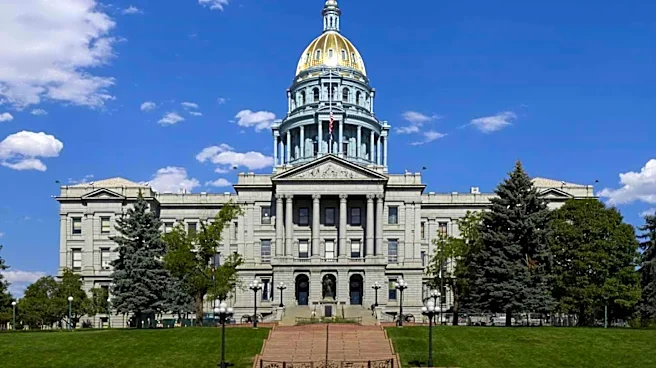
Colorado officials, including Governor Jared Polis and four members of the state's congressional delegation, have urged the federal government to implement an immediate freeze on planned wild horse roundups. Their primary concern is the inhumane nature
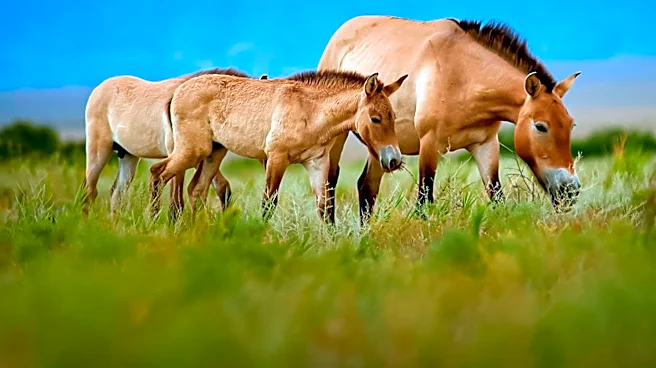
of these operations, which often involve low-flying helicopters chasing wild horses into corrals, leading to terror, injuries, and even deaths among the animals. This call follows an August roundup in northwest Colorado where 894 horses were gathered and nine died. The Bureau of Land Management (BLM) is preparing for another operation in the Sand Wash Basin near Craig from September 17-28, aiming to reduce the herd by approximately 60%. While the Interior Department asserts its management efforts are science-based and legally required to prevent suffering and maintain ecological balance, Colorado officials advocate for expanding fertility control as a more humane and cost-effective alternative.
Why It's Important?
This dispute highlights a significant conflict between federal land management practices and state-level concerns regarding animal welfare and environmental stewardship. The ongoing debate over wild horse management impacts not only the welfare of these iconic animals but also the ecological balance of western rangelands. The use of helicopter roundups, while deemed necessary by the BLM to control overpopulation and prevent resource depletion, faces strong opposition due to perceived cruelty and high mortality rates. Colorado's push for fertility control methods could set a precedent for more humane and sustainable population management strategies, potentially influencing federal policy across other western states where similar roundups are planned. The outcome of this advocacy could reshape how wild horse populations are managed on public lands, affecting both animal rights advocates and land management agencies.
What's Next?
Colorado officials will continue to press the Interior Department and the BLM for an immediate halt to the planned wild horse roundups and a reevaluation of current management strategies. They will likely advocate for increased federal investment in and implementation of fertility control programs as a primary method for population management. The BLM, however, maintains that gathers are necessary when herd numbers exceed appropriate management levels, especially given drought conditions affecting food and water sources. The upcoming roundup in the Sand Wash Basin will proceed as scheduled unless federal officials reverse course. This situation may lead to further legal challenges or increased public pressure on federal agencies to adopt alternative, less invasive methods for managing wild horse populations across Idaho, Nevada, and Wyoming, where other roundups are also planned.
Beyond the Headlines
The controversy surrounding wild horse roundups touches upon deeper ethical and philosophical questions about human interaction with wildlife and the management of natural resources. It underscores the tension between preserving ecological balance and ensuring animal welfare, particularly for species that hold significant cultural and symbolic value in the American West. The debate also reflects differing views on the role of government in managing public lands and wildlife, with states seeking more collaborative and humane approaches. A shift towards fertility control could represent a more progressive and sustainable model for wildlife management, emphasizing prevention over reactive and often controversial interventions. This issue also brings to light the broader challenges of land degradation and resource scarcity in arid western regions, making effective and ethical wildlife management even more critical.