
What's Happening?
The Farmers' Almanac has released its winter weather forecast for 2026-2027, predicting a season of sharp contrasts across the United States. The forecast, prepared by Caleb Weatherbee, suggests that some
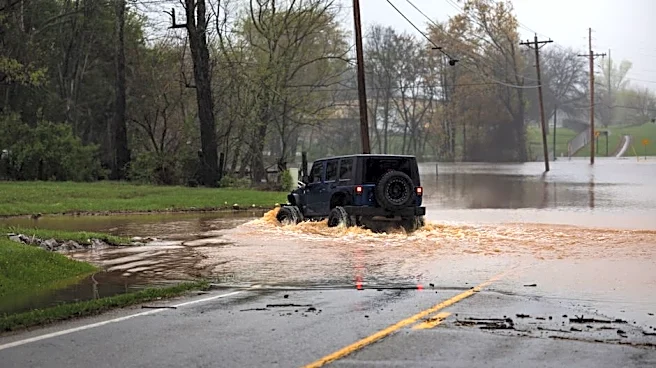
regions will experience repeated storms, raw rain, and heavy, wet snow, while others may see milder weather interrupted by quick cold snaps. The southern United States is expected to face wetter-than-normal conditions due to El Niño, with an active storm track extending from Southern California through Texas and the Southeast. In contrast, the northern regions, including the West, northern Plains, Upper Midwest, and Great Lakes, are likely to experience near-normal temperatures with fast-moving clippers and sudden cold snaps. The Northeast may face a complicated winter pattern with varying precipitation types, while the Pacific Northwest could see a more changeable snow season.
Why It's Important?
The Farmers' Almanac's forecast is significant as it helps individuals and industries prepare for the upcoming winter season. The predicted wetter conditions in the southern U.S. could impact agriculture, transportation, and infrastructure, requiring stakeholders to plan for potential disruptions. In the northern regions, the forecast of quick cold snaps and snow could affect energy consumption and public safety, necessitating preparedness measures. The Northeast's unpredictable weather patterns may challenge municipalities in managing snow removal and road safety. Overall, the forecast provides valuable insights for sectors reliant on weather conditions, such as agriculture, transportation, and energy, enabling them to mitigate risks and optimize operations.
What's Next?
As the winter season approaches, stakeholders across various sectors will likely monitor weather developments closely to adjust their strategies accordingly. Farmers may need to plan for potential impacts on crop yields and livestock, while transportation agencies might prepare for increased road maintenance and safety measures. Energy providers could anticipate fluctuations in demand due to temperature variations. Additionally, local governments in affected regions may enhance their emergency response plans to address potential weather-related challenges. The Farmers' Almanac's forecast will serve as a reference point for these preparations, although real-time weather updates will be crucial for making informed decisions.