




What's Happening?
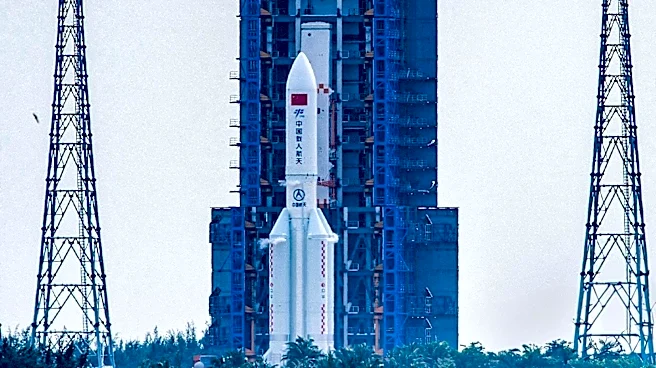
China's Foreign Ministry announced its continued advocacy for the peaceful use of outer space and active engagement in international space cooperation. This statement was made by ministry spokesperson Guo Jiakun, following the announcement that a Pakistani
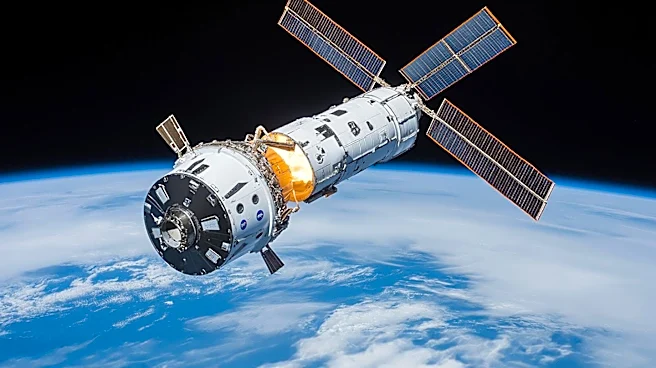
astronaut will participate in China's Shenzhou XXIV crewed mission. The Pakistani astronaut will serve as a payload specialist, completing a short orbital flight before returning to Earth aboard the Shenzhou-23 spacecraft. This joint mission marks the first time Chinese and foreign astronauts will fly together in China's manned space program, highlighting the deepening strategic cooperative partnership between China and Pakistan, especially as this year marks the 75th anniversary of their diplomatic ties.
Why It's Important?
China's emphasis on peaceful outer space use and international collaboration has significant implications for global space governance and U.S. interests. While the U.S. and China are major space powers, their relationship in this domain has often been characterized by competition rather than cooperation. China's outreach to countries like Pakistan for joint space missions could reshape alliances and influence the development of international space norms. For the U.S., this development underscores the need to monitor China's expanding space capabilities and diplomatic efforts, particularly concerning dual-use technologies that could have both civilian and military applications. The inclusion of a Pakistani astronaut also signals China's growing influence in South Asia and its ability to attract international partners for its ambitious space agenda, potentially challenging existing U.S.-led space partnerships.
What's Next?
The upcoming Shenzhou XXIV mission with a Pakistani astronaut will be closely watched as a demonstration of China's capabilities and its commitment to international space collaboration. This mission could pave the way for further joint space endeavors with other nations, potentially expanding China's network of space partners. The U.S. and its allies will likely continue to assess the strategic implications of these collaborations, particularly regarding technology transfer and the long-term balance of power in space. Future discussions on international space law and resource utilization may also be influenced by China's proactive stance on peaceful use and cooperation, potentially leading to new frameworks or challenges to existing ones.
Beyond the Headlines
The narrative of peaceful outer space use, while diplomatically appealing, often coexists with underlying geopolitical competition. China's space program, like those of other major powers, has both civilian and military components, raising questions about the true extent of its 'peaceful' intentions. The collaboration with Pakistan, a long-standing strategic partner, could be viewed not just as scientific cooperation but also as a move to strengthen alliances and project influence. This development highlights the complex interplay between scientific advancement, national security, and international diplomacy in the 21st century space race. It also underscores the ethical considerations surrounding the militarization of space and the need for transparent and verifiable agreements to ensure that outer space remains a domain for peaceful exploration and benefit for all humanity.