
What's Happening?
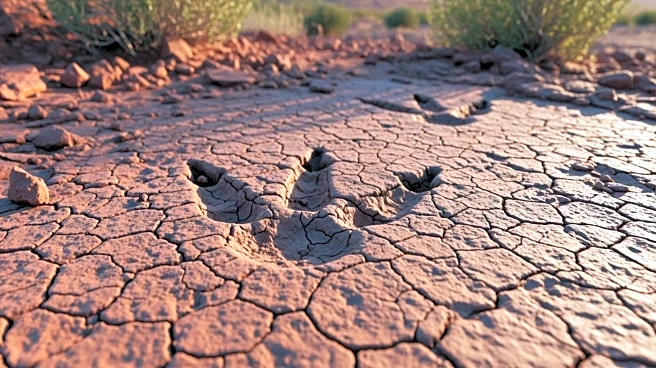
Newly discovered dinosaur footprints in northern Chile's Atacama Desert are providing scientists with a rare glimpse into a world that existed 160 million years ago. The find, published in the Swiss Journal
of Palaeontology, includes the smallest known theropod tracks ever recorded in Chile. These fossilized footprints were unearthed in one of the driest places on Earth today, but researchers suggest that the region experienced cycles of flooding and drought during the Jurassic period, creating ephemeral wetlands that attracted various dinosaur species.
Why It's Important?
The discovery of these tracks is significant as it expands the understanding of dinosaur behavior and environmental conditions during the Jurassic period. The tracks suggest a more diverse ecosystem than previously thought, with small theropods possibly being juvenile predators or diminutive species adapted to arid conditions. This research contributes to the broader field of paleoclimatology, offering insights into how ancient species responded to extreme environmental variability, which is relevant to current studies on climate change and its impact on biodiversity.