


What's Happening?
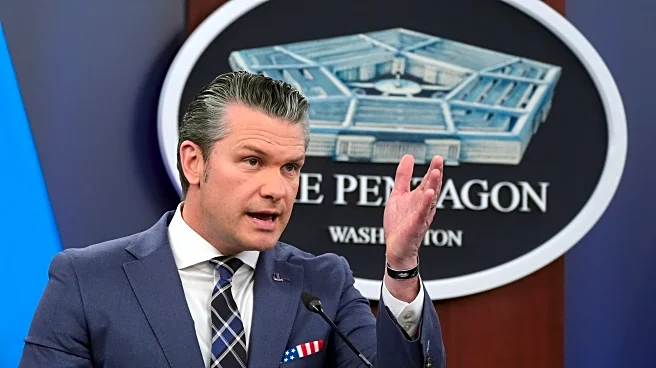
A federal judge has struck down the Pentagon's press restrictions, which had been implemented by Defense Secretary Pete Hegseth. The ruling was celebrated by The New York Times and First Amendment advocates, who viewed the restrictions as an attack on press freedom.
The Pentagon's policy had limited access to traditional media outlets, favoring smaller, right-wing media. The judge ruled that the policy constituted 'viewpoint discrimination,' as it favored outlets that published content favorable to the Pentagon. The decision is seen as a victory for press freedom, allowing journalists to regain access to the Pentagon complex.
Why It's Important?
The ruling is significant as it reaffirms the importance of press freedom in the United States, particularly in covering military operations. The restrictions had limited the ability of major news organizations to report on Pentagon activities, potentially affecting public knowledge and accountability. By overturning these restrictions, the ruling ensures that a diverse range of media can report on military actions, which is crucial for transparency and informed public discourse. The decision also highlights the ongoing tension between government control and media independence, a critical issue in democratic societies.
What's Next?
Following the ruling, the Pentagon has indicated plans to appeal the decision, suggesting that the legal battle over press access may continue. Journalists who were previously barred are expected to seek reinstatement of their credentials, potentially leading to changes in how the Pentagon manages media access. The outcome of the appeal and any subsequent policy adjustments will be closely watched by media organizations and First Amendment advocates. The case may set a precedent for how government agencies can regulate media access, impacting future interactions between the press and the military.