





What's Happening?
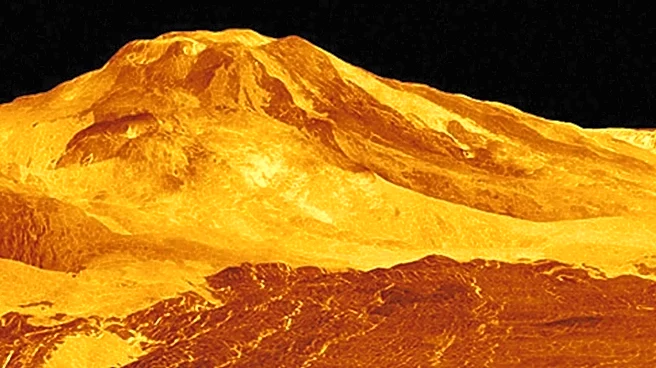
A study led by Richard Ghail from the University of London, published in Earth and Planetary Science Letters, suggests that Venus's polygonal plains may indicate a past with large oceans. The research challenges previous theories that these patterns were
formed by volcanic activity, proposing instead that they resemble seafloor mud cracks on Earth. This hypothesis is based on the analysis of Venus's surface features, which show similarities to Earth's marine environments. The study adds weight to the theory that Venus once had conditions suitable for water bodies, potentially altering our understanding of the planet's history.
Why It's Important?
This research could significantly impact our understanding of Venus and its potential to have once supported life. By suggesting that Venus had large oceans, the study opens new avenues for exploring the planet's climate history and its evolution. This could also influence the search for life on other planets, as understanding how Venus lost its water could help identify exoplanets capable of sustaining water. Additionally, the findings may offer insights into Earth's future, particularly regarding ocean retention as the sun evolves.