
What's Happening?
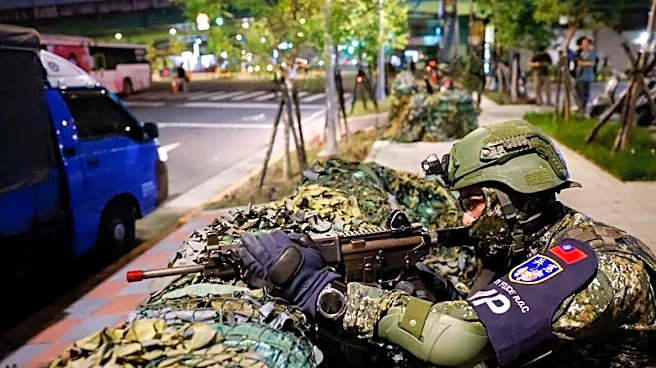
Taiwan is conducting its annual Han Kuang military drills, emphasizing flexibility and resilience over advanced weaponry. These exercises, running until August 14, aim to enhance Taiwan's defense capabilities against China's military threats. The drills incorporate
U.S.-inspired military communication methods, such as backbriefing, to improve self-reliance and effectiveness among Taiwanese troops. This year's drills also involve a significant number of reservists, reflecting Taiwan's strategy to address the military power imbalance with China. Urban resilience drills are also part of the exercises, simulating telecommunications interference in major cities to prepare for potential attacks.
Why It's Important?
The drills underscore Taiwan's efforts to strengthen its military capabilities in response to China's ongoing threats. The inclusion of U.S. military training methods indicates deepening ties between Taiwan and the U.S., despite the lack of formal diplomatic recognition. This collaboration is crucial for Taiwan's defense strategy, especially given the political constraints on defense spending. The exercises also highlight the U.S.'s commitment to supporting Taiwan's defense, which is vital for maintaining stability in the region. However, uncertainties remain regarding U.S. arms sales to Taiwan, which could impact the island's long-term defense capabilities.
What's Next?
Taiwan will continue to focus on enhancing its military readiness and resilience through these drills. The outcome of the exercises may influence future defense policies and budget allocations. The U.S. and Taiwan are likely to maintain their informal military collaboration, although the extent of U.S. arms sales remains uncertain. The drills may also prompt reactions from China, which could affect regional security dynamics. Taiwan's government will need to navigate domestic political challenges to secure necessary defense resources.