
What's Happening?
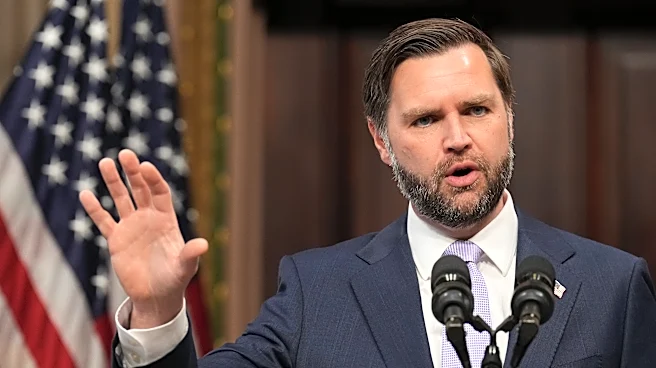
The Trump administration is intensifying its efforts to combat fraud in federal programs, particularly focusing on Medicare and Medicaid. Vice President JD Vance has been actively promoting the administration's
anti-fraud initiatives, highlighting the need to protect these programs from fraudulent activities. The administration has identified significant amounts of improper payments, with the Government Accountability Office (GAO) estimating that between $233 billion and $521 billion could be lost annually to fraud. Dr. Mehmet Oz, leading the Centers for Medicare and Medicaid Services, has pointed out various fraud schemes across states, including Medicaid-funded programs and durable medical equipment providers. The administration has also placed a moratorium on new enrollments for certain Medicare providers to curb fraudulent activities.
Why It's Important?
The administration's focus on fraud prevention is crucial as it aims to safeguard taxpayer funds and ensure the integrity of federal programs. With improper payments in Medicare and Medicaid accounting for a significant portion of the total, addressing fraud is essential for maintaining public trust and the sustainability of these programs. The efforts could lead to more stringent oversight and accountability, potentially reducing financial losses and improving program efficiency. However, the administration's approach has faced criticism for its harsh stance towards Democratic-led states and the perceived exaggeration of fraud levels. The outcome of these initiatives could influence public perception and political dynamics, especially with upcoming elections.
What's Next?
The administration plans to continue its crackdown on fraud, with further investigations and potential withholding of funds from states that fail to address fraudulent activities. The Department of Health and Human Services' Office of Inspector General will review state Medicaid Fraud Control Units, and states may face federal support cuts if they do not enhance their fraud prosecution efforts. The administration's actions are likely to prompt responses from state governments, healthcare providers, and political leaders, potentially leading to policy changes and increased scrutiny of federal program management.