







What's Happening?
The Internal Revenue Service (IRS) has experienced significant delays in processing millions of tax refunds, primarily due to verification problems. During the 2025 filing season, approximately 2.1 million returns were flagged for potential identity theft,
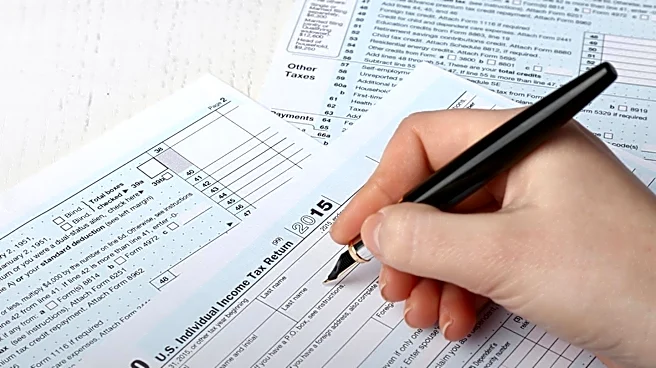
requiring taxpayers to verify their identities before receiving refunds. The subsequent filing season in 2026 also saw processing issues, including additional reviews and delays for those expecting paper refund checks. To mitigate future delays, the IRS advises taxpayers to meticulously review their returns before filing in 2027. Key areas for review include ensuring names and Social Security numbers match official records, accurately identifying qualified dependents, accounting for all sources of income, verifying filing status and tax claims, and double-checking bank account details for direct deposits. The IRS also noted that in 2026, it sent out about 4.2 million notices requesting banking information as it transitioned away from paper checks, further highlighting the importance of accurate payment details.
Why It's Important?
These IRS delays have a substantial impact on American taxpayers, potentially causing financial strain and uncertainty. For individuals and families relying on timely refunds for budgeting, debt repayment, or essential expenses, prolonged delays can disrupt financial planning and create hardship. The emphasis on identity verification underscores the ongoing threat of tax-related identity theft, which can compromise personal financial security and lead to complex resolution processes with the IRS. The shift away from paper checks and the increased reliance on electronic transactions also highlight a broader move towards digital financial systems, which, while efficient, require precise data entry to avoid errors. Businesses, particularly those with employees who experience refund delays, might also see indirect effects on employee morale and financial stability. The IRS's proactive advice aims to empower taxpayers to prevent common errors that trigger these delays, thereby streamlining the tax season for both the agency and the public.
What's Next?
Looking ahead to the 2027 filing season, taxpayers should anticipate continued vigilance from the IRS regarding identity verification and data accuracy. The agency's guidance suggests that individuals should take extra steps to ensure their tax returns are error-free before submission. This includes resolving any discrepancies in personal information, confirming dependent eligibility, gathering all income documents, and verifying bank details. Taxpayers who have been assigned an Identity Protection PIN (IP PIN) or have enrolled in the program must retrieve their current six-digit number, as it changes annually. The IRS will likely continue to refine its security checks and processing methods, but the onus remains on taxpayers to submit accurate information to avoid delays. Responding promptly and accurately to any IRS verification notices will be crucial for those whose returns are flagged, as filing a second return will not expedite the process.
Beyond the Headlines
The persistent issues with IRS refund delays and verification problems point to deeper systemic challenges within the U.S. tax administration. The increasing complexity of tax codes, coupled with the rising sophistication of identity theft schemes, places immense pressure on the IRS's resources and technological infrastructure. These delays can erode public trust in government efficiency and create a perception of bureaucratic inefficiency. Furthermore, the move towards digital processing, while intended to modernize the system, also introduces new vulnerabilities and requires taxpayers to be more digitally literate and meticulous. The situation underscores the need for continuous investment in IRS technology and staffing to handle the volume and complexity of tax filings. It also highlights the broader societal impact of financial literacy, as taxpayers who understand the intricacies of tax filing and verification processes are better equipped to navigate potential pitfalls and ensure timely refunds.