









What's Happening?
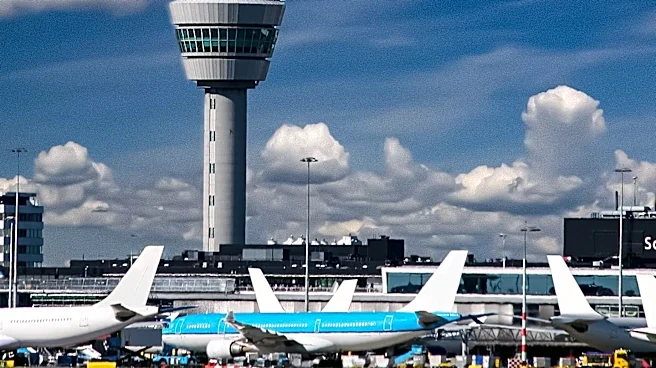
KLM has canceled 149 flights to and from Amsterdam's Schiphol Airport due to severe westerly winds. The airport spokesperson confirmed that not all runways are operational, limiting the number of aircraft that can depart and arrive. This situation has prompted
airlines, including KLM, easyJet, and Lufthansa, to adjust their flight schedules, leading to numerous cancellations and delays. Passengers affected by these cancellations were informed on Saturday and are being rebooked for the earliest available flights. The cancellations on Sunday follow similar disruptions on Friday and Saturday caused by strong winds across the Netherlands. The weather conditions, characterized by strong gusts, rain, and poor visibility, have significantly impacted air travel operations at one of Europe's busiest hubs.
Why It's Important?
The widespread flight cancellations at Schiphol Airport, a major international hub, have significant implications for global air travel and the aviation industry. Disruptions at such a critical junction can create a ripple effect, causing delays and cancellations for connecting flights worldwide, including those to and from the U.S. For U.S. travelers, this means potential itinerary changes, missed connections, and extended travel times, impacting both business and leisure plans. Economically, these cancellations lead to substantial financial losses for airlines due to rebooking costs, compensation for affected passengers, and lost revenue from canceled flights. The incident also highlights the vulnerability of air travel to adverse weather conditions, underscoring the need for robust contingency plans and effective communication strategies to mitigate passenger inconvenience and operational setbacks.
What's Next?
Schiphol Airport and KLM will continue to monitor weather conditions closely, with flight schedules remaining subject to change based on wind intensity and runway availability. Passengers with upcoming flights from Schiphol are advised to check their flight status directly with their airline for the latest updates. Airlines will focus on rebooking affected passengers and managing the backlog of travelers. The airport authorities will work to restore full runway operations as soon as weather conditions permit. This situation may lead to continued delays and cancellations in the coming days as airlines work to normalize their schedules and accommodate displaced passengers. The incident may also prompt a review of operational protocols during severe weather to enhance resilience and minimize future disruptions.
Beyond the Headlines
Beyond the immediate travel disruptions, this event underscores broader challenges faced by the aviation sector, particularly in managing the increasing frequency and intensity of extreme weather events. As climate patterns shift, airports and airlines may need to invest more in infrastructure resilient to severe winds and other meteorological phenomena. This could include advanced weather forecasting technologies, improved air traffic control systems, and potentially even modifications to runway design or operational procedures. The incident also highlights the psychological toll on travelers, who face uncertainty, stress, and financial burdens due to unexpected cancellations. This could lead to increased demand for flexible booking options and comprehensive travel insurance, influencing future trends in the travel industry.