



What's Happening?
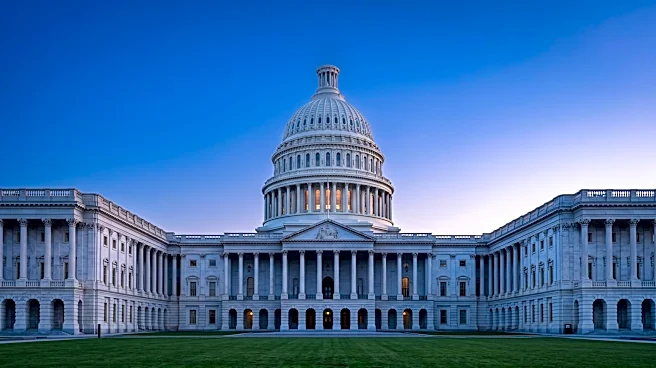
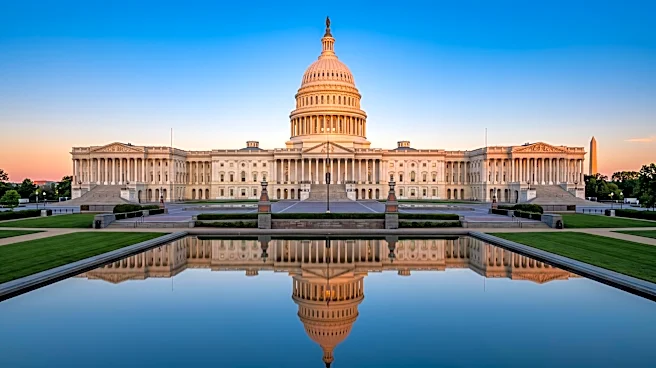
U.S. Senators Todd Young and Gary Peters have introduced the Visionary Intersections Modernization Act, a legislative initiative aimed at enhancing traffic safety and providing states and local communities with more options for federal funding to construct
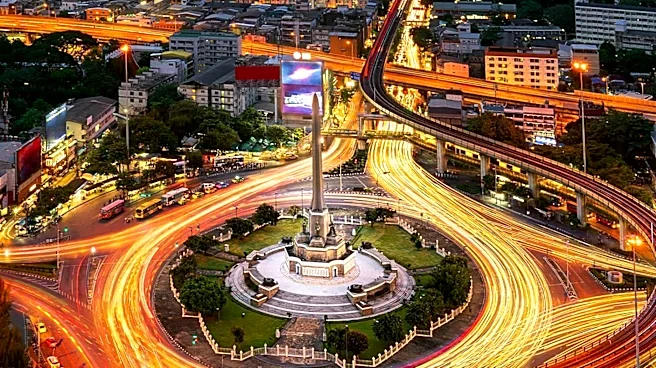
roundabouts. The proposed bill seeks to amend the Surface Transportation Block Grant Program, making the construction of roundabouts an eligible use of these federal funds. Senator Young highlighted that federal infrastructure investments should prioritize safety and empower communities to protect their residents. He cited Indiana's success, particularly Carmel, which has approximately 150 roundabouts and has seen an 80% reduction in injury accidents and a 40% decrease in overall accidents since the late 1990s.
Why It's Important?
This legislation is significant for U.S. infrastructure development and public safety. By making roundabout construction explicitly eligible for federal funding, the bill could incentivize more communities nationwide to adopt this traffic management solution. Roundabouts are proven to reduce severe accidents and improve traffic flow, leading to safer roads for drivers and pedestrians. This could result in fewer fatalities and injuries, lowering healthcare costs and insurance premiums over time. For local governments, it offers a new avenue for funding critical infrastructure projects, potentially alleviating financial burdens and accelerating safety improvements. The success story of Carmel, Indiana, serves as a compelling case study, demonstrating the tangible benefits that can be replicated across the country, thereby enhancing the overall efficiency and safety of the national transportation network.
What's Next?
The Visionary Intersections Modernization Act will now proceed through the legislative process, requiring consideration and potential votes in both the Senate and the House of Representatives. If passed, the bill would amend the Surface Transportation Block Grant Program, making federal funds more accessible for roundabout construction. This could lead to an increase in proposals from state and local transportation departments seeking to implement roundabouts in their communities. Engineering firms and construction companies specializing in infrastructure projects may see an uptick in demand. Additionally, the National Highway Traffic Safety Administration (NHTSA) and state transportation agencies might develop new guidelines or best practices for roundabout design and implementation, further promoting their effective use across the country.
Beyond the Headlines
The push for roundabouts reflects a broader shift in urban planning and traffic engineering towards proactive safety measures rather than reactive responses to accidents. This legislative effort highlights a growing recognition of data-driven solutions in infrastructure development, where proven designs are prioritized for their societal benefits. Beyond immediate safety improvements, widespread adoption of roundabouts can also contribute to environmental benefits by reducing vehicle idling times and associated emissions. Ethically, it underscores a commitment to public welfare by investing in infrastructure that demonstrably saves lives and reduces injuries. This move could also foster greater collaboration between federal, state, and local entities in implementing standardized, effective traffic solutions, moving away from disparate approaches to road safety.