







What's Happening?
The City of Tuscaloosa has officially unveiled the new Linton's Barbershop Plaza, a $1.4 million project dedicated to honoring the legacy of the Rev. Thomas Linton and his contributions to preserving the city's Civil Rights history. The plaza, funded
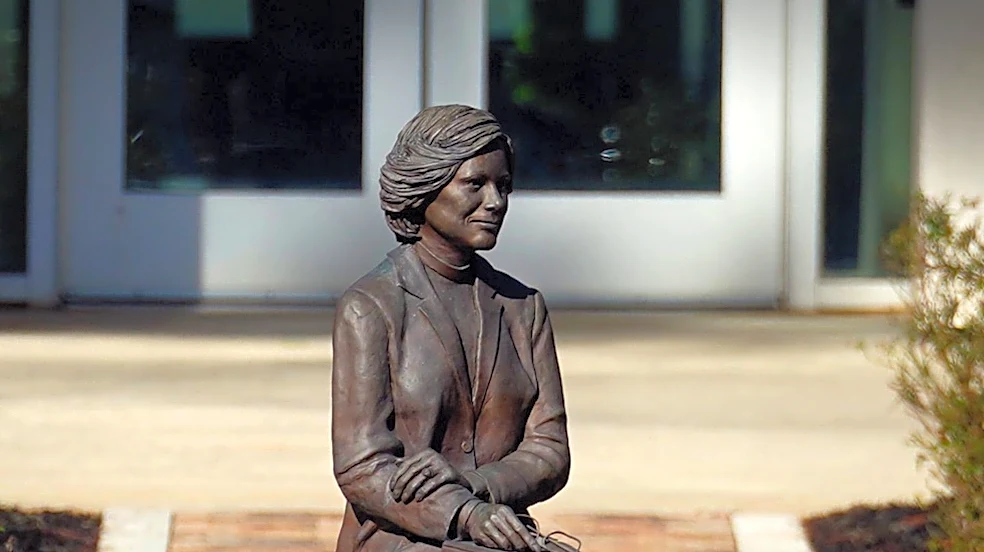
through the city's Elevate Tuscaloosa initiative, is located at the former site of Linton's barbershop at 1305 T.Y. Rogers Jr. Avenue. This public space aims to serve as a reminder of Tuscaloosa's role in the Civil Rights movement. The project includes an art installation by Caleb O'Connor depicting the barbershop and a relief of Linton, interpretive panels detailing major Civil Rights milestones in Tuscaloosa, and a central walkway featuring a historical timeline. The Linton family sold the property to the city and entrusted Linton's collection of Civil Rights artifacts to the Tuscaloosa Civil Rights History & Reconciliation Foundation.
Why It's Important?
This initiative is important as it formally recognizes and preserves a significant part of American history, specifically the Civil Rights movement in Tuscaloosa, Alabama. By transforming a historical site into a public plaza, the city is creating a tangible space for education and reflection on the struggles and achievements of local Civil Rights activists. This project ensures that future generations can learn about the courage and sacrifices made for racial equality, fostering a deeper understanding of the nation's past. The preservation of Rev. Thomas Linton's legacy, whose barbershop served as an informal museum for Civil Rights artifacts, highlights the role of community leaders in documenting and sharing history. It also underscores the ongoing efforts to reconcile with the past and promote social justice.
What's Next?
The Linton's Barbershop Plaza is expected to become a key component of the Tuscaloosa Civil Rights History Trail, further integrating the site into the city's broader historical narrative. The Tuscaloosa Civil Rights History & Reconciliation Foundation will continue to manage and utilize Rev. Linton's collection of artifacts, likely developing educational programs and exhibits to engage the public. The plaza is anticipated to serve as a gathering place for community discussions and events related to civil rights and social justice, as suggested by District 7 Councilor Joe Eatmon. This development could also inspire similar preservation efforts for other historical sites within Tuscaloosa and beyond, reinforcing the importance of local contributions to national historical movements.
Beyond the Headlines
Beyond its immediate function as a memorial, the Linton's Barbershop Plaza represents a deeper commitment to historical truth and reconciliation within the community. The project acknowledges the often-overlooked local narratives within the larger Civil Rights movement, emphasizing that significant change often begins at the grassroots level. Ethically, it addresses the responsibility of a city to remember and learn from its past, particularly concerning periods of social injustice. Culturally, it reinforces the value of public spaces as sites of memory and education, where history is not just recounted but experienced. This initiative could also foster a stronger sense of community identity and pride, as residents engage with a shared history that shaped their city and nation.